
What's Happening?
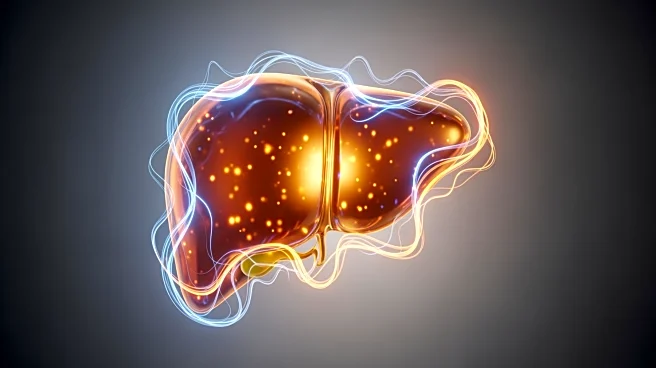
Recent research has identified the protein iRhom2 as a key regulator in the secretion of HMGB1, a factor involved in inflammation and hepatocyte senescence, particularly in the context of ischemia-reperfusion
injury (IRI) in the liver. The study found that iRhom2 expression is significantly upregulated in liver transplant patients experiencing IRI, suggesting its role in exacerbating liver injury. iRhom2 is predominantly expressed in immune cells such as Kupffer cells and monocyte-derived macrophages. The research demonstrated that iRhom2 deficiency in macrophages leads to reduced ER stress and mitochondrial dysfunction, thereby mitigating cell death and oxidative stress. Furthermore, iRhom2 was shown to control HMGB1 secretion independently of TACE catalytic activity, highlighting its potential as a therapeutic target for reducing liver injury.
Why It's Important?
The findings underscore the potential of targeting iRhom2 as a therapeutic strategy to alleviate liver damage caused by IRI, a common complication in liver transplantation. By modulating the inflammatory response and reducing hepatocyte senescence, therapies aimed at inhibiting iRhom2 could improve transplant outcomes and patient survival rates. This research also contributes to a broader understanding of the molecular mechanisms underlying liver injury and repair, which could inform the development of new treatments for other liver-related diseases. The study's insights into the role of HMGB1 in promoting senescence further highlight the complex interplay between immune signaling and cellular aging processes.