



What's Happening?
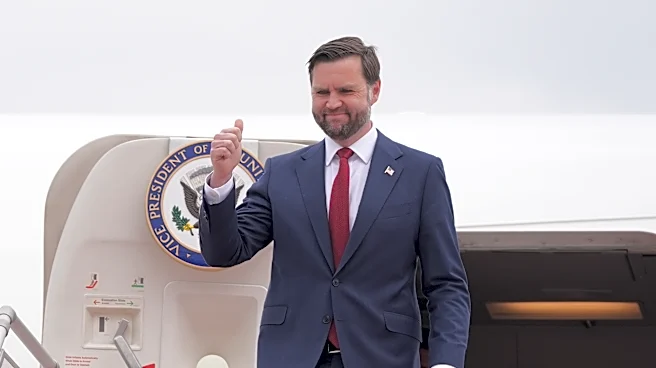
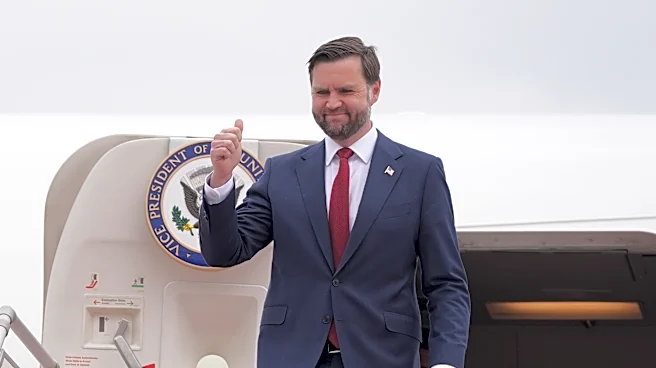
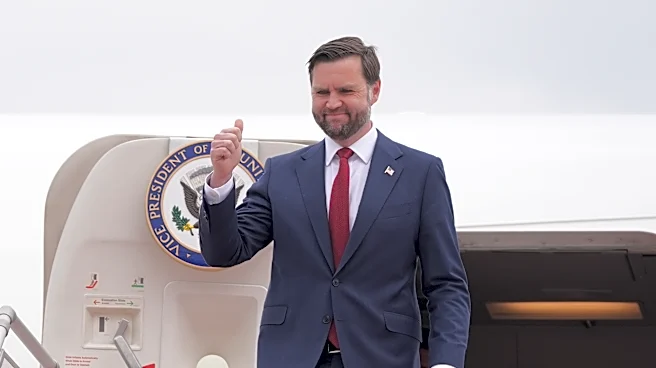
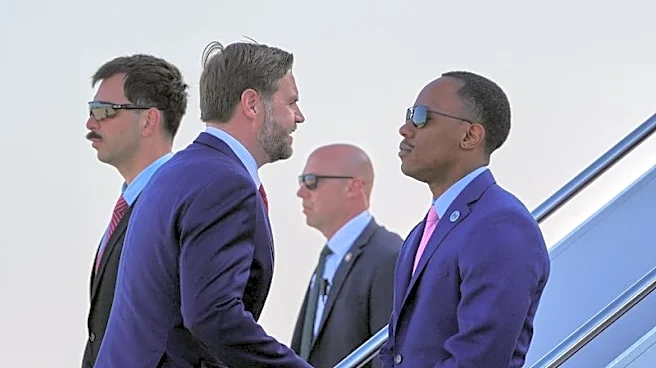
Senior U.S. and Iranian officials convened in Islamabad, Pakistan, for peace talks aimed at resolving ongoing conflicts and tensions. The discussions, mediated by Pakistani Prime Minister Shehbaz Sharif, involved U.S. Vice President JD Vance, special
envoy Steve Witkoff, and President Trump's son-in-law Jared Kushner. The Iranian delegation, led by Parliamentary Speaker Mohammad Baqer Qalibaf and Foreign Minister Abbas Araqchi, outlined their conditions for negotiations, including issues related to the Strait of Hormuz, blocked assets, war reparations, and a regional ceasefire. Despite the talks, fighting continues in Lebanon, with Hezbollah conducting military operations against Israeli positions.
Why It's Important?
The peace talks between the U.S. and Iran are crucial as they aim to address significant geopolitical tensions affecting global energy supplies and regional stability. The Strait of Hormuz, a vital chokepoint for global oil shipments, remains blocked by Iran, causing disruptions in energy supplies and contributing to global inflation. The ongoing conflict in Lebanon further complicates the situation, with nearly 2,000 casualties reported since March. Successful negotiations could lead to a ceasefire and potentially reopen the Strait, alleviating economic pressures and fostering regional peace.
What's Next?
If successful, the talks could lead to face-to-face negotiations, marking the highest-level U.S.-Iran discussions since 1979. However, the situation remains precarious, with Iran demanding compensation for wartime damages and asserting control over the Strait of Hormuz. The U.S. and Iran must navigate complex diplomatic challenges, including the interests of their allies, to achieve a lasting resolution. The outcome of these talks could significantly impact global energy markets and regional political dynamics.