
What's Happening?
Somalia's Minister of Environment and Climate Change, Lt. Gen. Bashir Mohamed Jama, has appealed for greater international climate financing to help vulnerable nations combat growing security and humanitarian
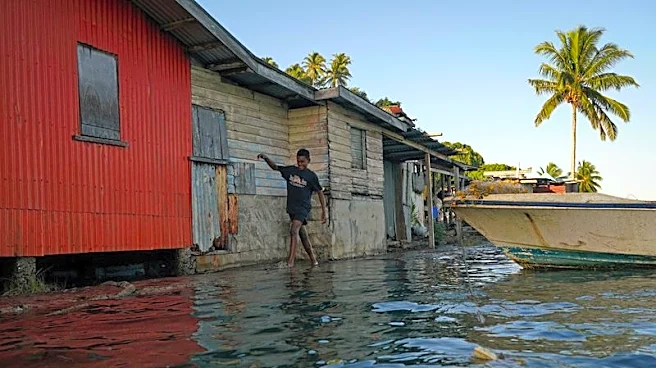
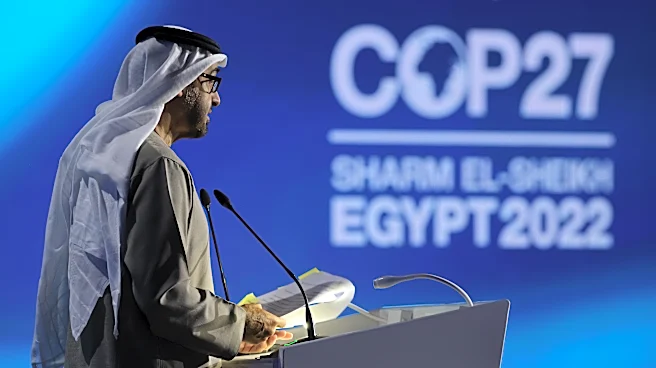
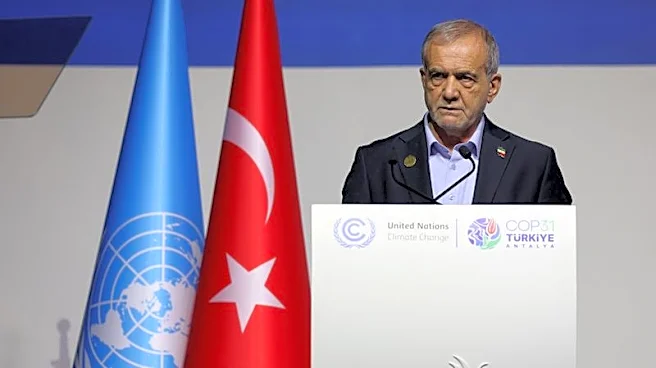
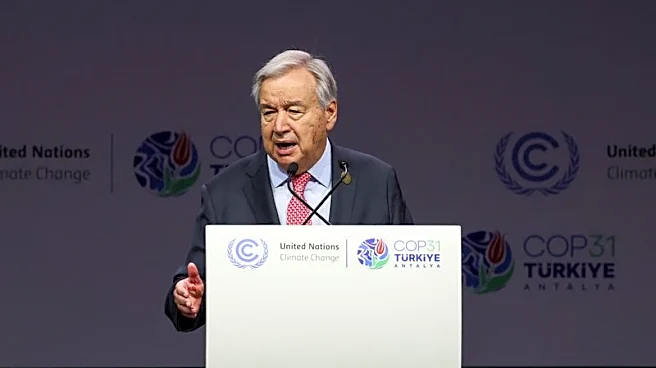
threats linked to climate change. Speaking at a high-level ministerial meeting on Climate, Peace and Security in Antalya, Türkiye, on the sidelines of the COP31 climate conference, Minister Jama highlighted that recurrent droughts, floods, and displacement are intensifying instability in Somalia. He emphasized that climate change poses both a humanitarian and security challenge for the country, undermining livelihoods and increasing community vulnerability. Somalia has integrated climate priorities into national policy frameworks, including the National Transformation Plan, the National Adaptation Plan (NAP), and its third Nationally Determined Contribution (NDC 3.0), and is developing a national Climate, Peace and Security Strategy. However, translating these commitments into action is challenging due to limited access to predictable and flexible climate financing for fragile and conflict-affected countries.
Why It's Important?
The call for increased climate financing from Somalia underscores the critical link between environmental degradation, humanitarian crises, and national security, a connection that has significant implications for international aid and foreign policy. For the U.S. and other developed nations, this highlights the growing demand for climate-related assistance, particularly in regions already grappling with instability. The inability of vulnerable countries like Somalia to access flexible and reliable climate finance can exacerbate existing conflicts and create new ones, potentially leading to increased migration, regional instability, and a greater need for humanitarian intervention. This situation could strain international resources and necessitate a re-evaluation of how climate aid is distributed and utilized, emphasizing the need for proactive investment in climate adaptation and resilience to prevent future crises.
What's Next?
Somalia's participation in COP31 and similar international forums indicates a continued effort to secure global support for climate adaptation and resilience programs. The country will likely continue to advocate for expanded climate financing, strengthened international cooperation, and support for locally driven projects to enhance community resilience and mitigate security risks associated with environmental pressures. International partners, including the U.S., will face ongoing pressure to deliver on climate finance pledges and ensure that funding mechanisms are accessible and effective for conflict-affected states. The development of Somalia's national Climate, Peace and Security Strategy suggests a structured approach to addressing these intertwined challenges, which will require sustained international engagement and financial backing to achieve meaningful results on the ground.
Beyond the Headlines
The situation in Somalia exemplifies a broader global challenge where climate change acts as a threat multiplier, intensifying existing vulnerabilities and creating complex humanitarian and security dilemmas. Beyond the immediate financial needs, this scenario raises ethical questions about the responsibility of industrialized nations, historically the largest contributors to climate change, to support countries disproportionately affected by its impacts. The competition over scarce natural resources, exacerbated by climate shocks, can deepen inter-communal tensions and conflict, highlighting the need for integrated approaches that combine climate action with peacebuilding and development efforts. The long-term implications include potential shifts in global migration patterns, increased pressure on international humanitarian systems, and the imperative for a more equitable and effective global climate finance architecture that prioritizes the most vulnerable.