






What's Happening?
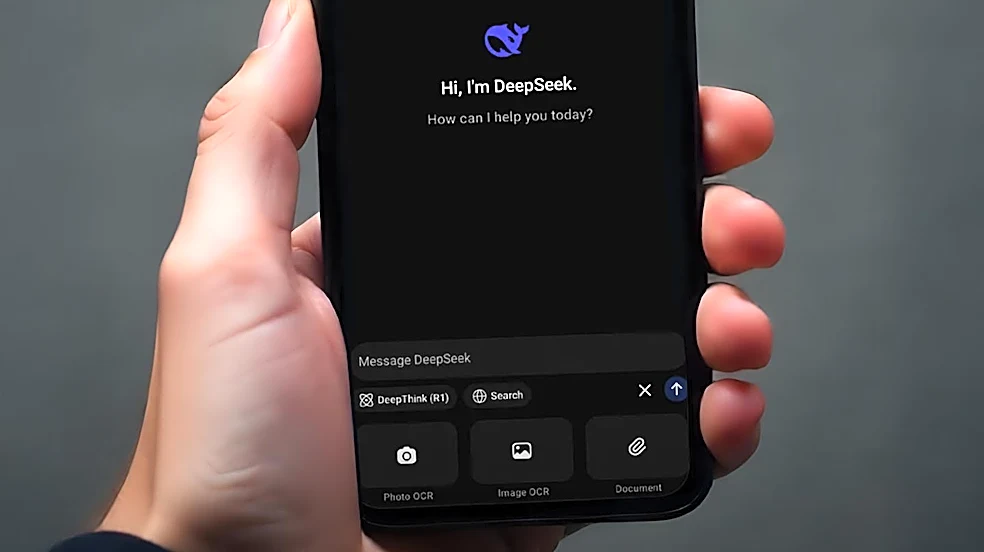
A new study is exploring the use of artificial intelligence to reconstruct missing passages in damaged ancient Tibetan manuscripts from Dunhuang, China. Researchers have adapted the DeepSeek-R1 language model, creating DeepSeek-R1-Tibet, to suggest characters
and syllables that have deteriorated over centuries. This AI model was fine-tuned using ancient Tibetan texts from volumes 1-7 of the Dunhuang documents held by the National Library of France, which were first extracted via optical character recognition and then verified by Tibetan-language specialists. To address the limited amount of ancient Tibetan material, a larger corpus of modern Tibetan (10.56 gigabytes) was also incorporated, alongside a syllable-based vocabulary designed to handle both modern and ancient forms. The system's effectiveness was tested by deliberately obscuring one, two, or three syllables in verified passages and evaluating the model's ability to predict the missing content. The fine-tuned DeepSeek-R1-Tibet showed significant improvement in accuracy, particularly when multiple syllables were missing, outperforming other models in suggesting correct candidates.
Why It's Important?
This development holds significant importance for the preservation and study of ancient texts, particularly those from the Silk Road. Many ancient Tibetan manuscripts, which contain invaluable information on history, religion, philosophy, and medicine, are in damaged conditions due to weathering, pests, and physical deterioration. Traditionally, specialists manually reconstruct these passages, a time-consuming and challenging process. The application of AI, specifically DeepSeek-R1-Tibet, offers a more systematic and potentially faster method for this reconstruction. By providing a short list of plausible candidates for missing text, the AI can significantly assist human experts, especially when consecutive syllables are absent, by considering broader contextual relationships within sentences. This approach could accelerate research and make previously inaccessible or difficult-to-read historical documents more comprehensible, thereby enriching our understanding of ancient cultures and knowledge systems. The methodology could also be adapted for other damaged manuscript traditions, extending its impact beyond Tibetan texts.
What's Next?
The immediate next steps involve further refinement and application of the DeepSeek-R1-Tibet model in real-world scenarios. While the model shows promise in suggesting plausible candidates, human expertise remains crucial for final verification and interpretation. Researchers will likely continue to improve the model's accuracy and generalization capabilities, especially in handling texts with significant damage or unfamiliar patterns. The potential for adapting this method to other ancient manuscript traditions, such as Classical Mongolian, Tangut, and Sogdian texts from the Silk Road, suggests future research and development in these areas. This could lead to a broader application of AI in digital humanities and cultural heritage preservation. The ongoing collaboration between AI developers and language specialists will be key to ensuring the model's outputs are linguistically and historically sound, ultimately aiming to augment, rather than replace, the work of human scholars.
Beyond the Headlines
The application of AI in reconstructing ancient manuscripts raises deeper implications regarding the intersection of technology and cultural heritage. While AI offers powerful tools for preservation and analysis, it also highlights the ethical considerations of digital reconstruction. The researchers caution that even expert-checked optical character recognition can contain errors, and a model trained on a relatively small ancient corpus might memorize patterns rather than truly generalize. This underscores the ongoing necessity of human oversight and critical evaluation in such projects. The goal is not for the AI to independently 'restore' a manuscript, but to serve as an advanced assistant, providing specialists with new avenues to approach texts that are no longer clearly legible. This paradigm shift emphasizes a collaborative future where AI enhances human capabilities in deciphering and preserving historical knowledge, ensuring that the nuances and complexities of ancient languages and cultures are accurately maintained and understood for future generations.