




What's Happening?
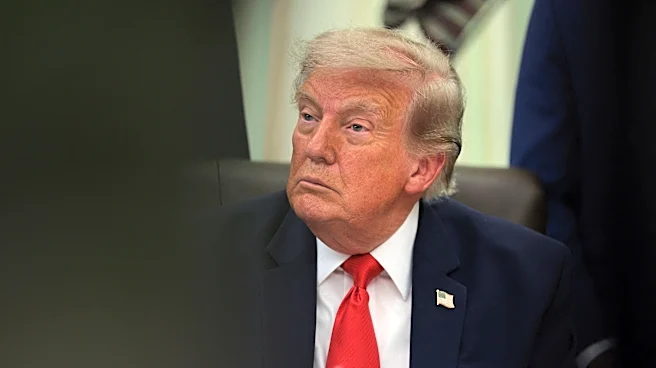
President Trump's approval ratings have reached historic lows during his second term, according to recent polling data. A CNN poll shows his approval at 34%, while an AP-NORC poll reports 33%, and a Quinnipiac University poll indicates an all-time low of
32%. The decline is attributed to widespread economic dissatisfaction, with only 30% of respondents approving of Trump's handling of the economy. This marks a significant drop compared to previous presidents at similar points in their second terms, such as Barack Obama and George W. Bush, who had higher economic approval ratings despite facing their own challenges.
Why It's Important?
The sharp decline in President Trump's approval ratings underscores the critical role of economic performance in shaping public opinion. As economic dissatisfaction grows, it poses a significant political liability for the administration, particularly with the upcoming midterm elections. The low approval ratings could impact the Republican Party's prospects in the elections, as economic issues are often a key factor in voter decision-making. The situation highlights the importance of addressing economic concerns to maintain political support and influence electoral outcomes.
What's Next?
With the midterm elections approaching, the Trump administration may need to prioritize economic policies that address public concerns and improve economic conditions. Efforts to boost economic confidence could involve policy adjustments, fiscal measures, or initiatives aimed at reducing inflation and increasing income growth. The administration's response to these challenges will likely influence voter sentiment and could determine the political landscape in the upcoming elections.