



What's Happening?
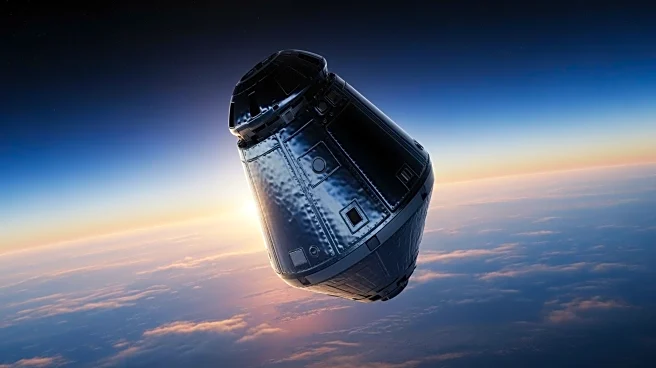
NASA's SpaceX Crew-11 mission has successfully returned to Earth after a 167-day mission aboard the International Space Station (ISS). The crew, consisting of NASA astronauts Zena Cardman and Mike Fincke, JAXA astronaut Kimiya Yui, and Roscosmos cosmonaut
Oleg Platonov, completed their mission with a parachute-assisted splashdown off the coast of California. The return occurred just ten-and-a-half hours after undocking from the ISS's Harmony module. During their time in space, the crew conducted various research and maintenance tasks. Meanwhile, three Expedition 74 crew members remain on the ISS, continuing their mission until the arrival of four new crewmates in February.
Why It's Important?
The successful return of Crew-11 marks a significant milestone in international space collaboration and the ongoing utilization of the ISS for scientific research. The mission's completion underscores the reliability of SpaceX's Dragon spacecraft for transporting astronauts to and from the ISS. This mission also highlights the importance of international partnerships in space exploration, with crew members from NASA, JAXA, and Roscosmos working together. The research conducted during the mission contributes to our understanding of space environments and supports future missions, including those planned under NASA's Artemis program aimed at returning humans to the Moon.
What's Next?
Following the return of Crew-11, preparations are underway for the launch of Crew-12, scheduled for February 15. This upcoming mission will be commanded by NASA astronaut Jessica Meir and piloted by Jack Hathaway, with Sophie Adenot of ESA and Andrey Fedyaev of Roscosmos as mission specialists. The Crew-12 mission will continue the scientific research and maintenance activities on the ISS, furthering international cooperation in space exploration. The ongoing rotation of crews ensures the continuous operation and utilization of the ISS as a platform for scientific discovery and technological advancement.