







What's Happening?
The Artemis II mission has provided a startling visual confirmation of the crowded conditions in low Earth orbit. During the mission, astronauts aboard the Orion spacecraft captured images showing a dense cluster of small glowing dots near Earth, initially
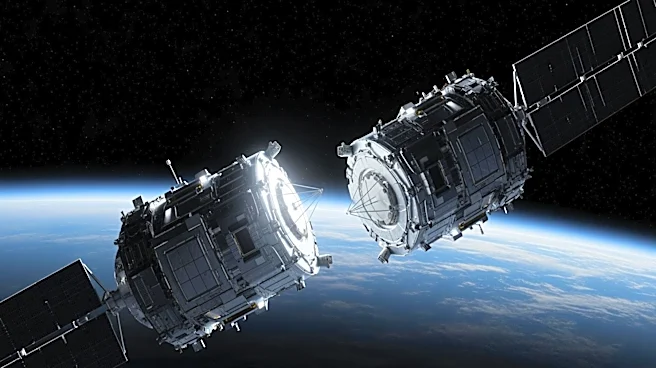
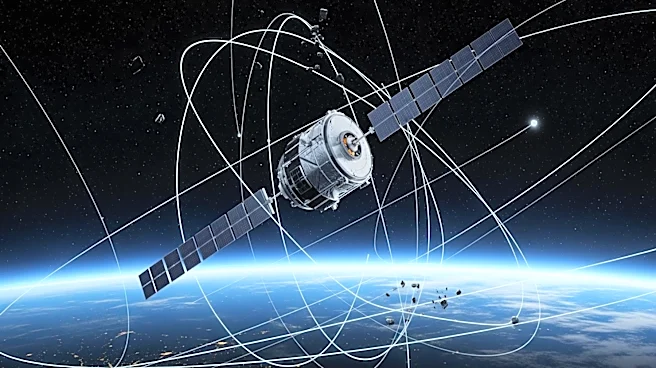
mistaken for stars. These dots were later identified as a multitude of artificial satellites. The images, compiled into a video by researcher Sean Doran, illustrate the significant number of man-made objects orbiting the planet. According to CelesTrak, there are currently over 33,480 pieces of space debris and spacecraft in orbit, with the U.S. Space Force estimating more than 50,600 tracked fragments. The majority of these objects are concentrated in low Earth orbit, traveling at speeds of about 7.8 km/s, posing significant risks for collisions.
Why It's Important?
The findings from the Artemis II mission underscore the growing issue of space debris, which presents logistical and safety challenges for space operations. The increasing number of objects in orbit necessitates precise calculations for new rocket launches to avoid collisions. The high velocity of these objects means even small fragments can cause catastrophic damage to spacecraft. This situation highlights the urgent need for international cooperation and policy development to manage space traffic and mitigate debris. The potential for hypervelocity collisions poses a threat not only to current space missions but also to future endeavors, impacting the safety and sustainability of space exploration.
What's Next?
Addressing the space debris problem will require coordinated efforts from international space agencies and private companies. Potential solutions include developing technologies for debris removal and implementing stricter regulations on satellite launches and end-of-life disposal. The Artemis II mission's findings may prompt discussions on enhancing space traffic management systems and investing in research to better understand and mitigate the risks associated with space debris. As the number of satellites continues to grow, ensuring the long-term sustainability of space activities will become increasingly critical.
Beyond the Headlines
The dense orbital traffic revealed by the Artemis II mission raises ethical and environmental concerns about humanity's impact on space. The accumulation of debris not only threatens operational satellites but also poses risks to future space exploration and the preservation of space as a shared resource. The situation calls for a reevaluation of how space is utilized and managed, emphasizing the need for responsible stewardship to prevent further degradation of the orbital environment. This development may also influence public perception of space activities, highlighting the importance of sustainable practices in the rapidly expanding space industry.