




What's Happening?
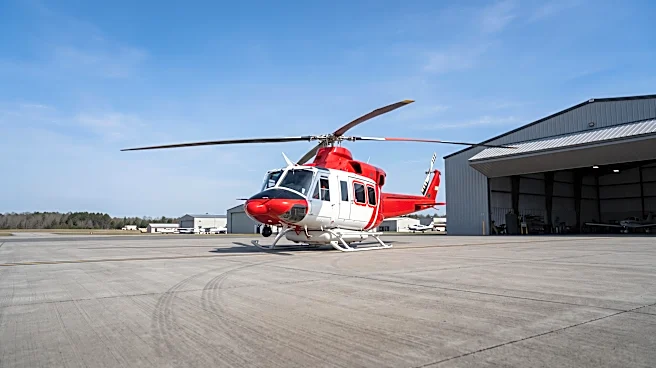
Wyoming Governor Mark Gordon officially launched new central firefighting bases, including a helibase located at the Natrona International Airport. This initiative centralizes the Wyoming State Forestry's assets, which have been deployed across the state
throughout the summer. The new helibase houses a Bell UH1H helicopter capable of carrying 320 gallons of water or fire retardant, designed to create firebreaks and prevent the spread of wildfires. Additionally, the facility includes two Single-Engine-Air-Tankers (SEATs) and a large Boeing tanker, contracted by the U.S. Forest Service, positioned just outside the hangar. Governor Gordon expressed his hope that these bases would assure the state's residents that their dedicated firefighters are well-supported and appreciated for their critical work in combating wildfires.
Why It's Important?
The establishment of these central firefighting bases is a significant development for Wyoming, a state frequently impacted by wildfires. By centralizing assets and resources, the state aims to improve the efficiency and effectiveness of its wildfire response efforts. This strategic move can lead to quicker deployment times, better coordination among firefighting units, and ultimately, a reduction in the damage caused by wildfires to natural resources, property, and communities. The investment in advanced aerial firefighting equipment, such as the Bell UH1H helicopter and the contracted tankers, signifies a proactive approach to mitigating the risks associated with increasingly severe fire seasons. This initiative not only protects the state's environment and infrastructure but also provides a sense of security to residents living in fire-prone areas, demonstrating a commitment to public safety and resource preservation.
What's Next?
Following the launch, the central firefighting bases are expected to be fully operational, providing continuous support for wildfire suppression efforts across Wyoming. The centralization of resources will likely lead to ongoing evaluations of their effectiveness in real-world scenarios, potentially informing future expansions or adjustments to the state's firefighting strategy. There may be continued collaboration with federal agencies like the U.S. Forest Service to optimize resource sharing and operational protocols. The success of these bases could also serve as a model for other states facing similar wildfire challenges, potentially influencing regional or national approaches to wildfire management. The focus will remain on rapid response and containment to minimize the impact of future fire incidents.
Beyond the Headlines
The establishment of these firefighting bases reflects a broader trend in the U.S. towards enhancing disaster preparedness and response capabilities, particularly in the face of escalating climate-related challenges. Wildfires are becoming more frequent and intense, necessitating significant investments in infrastructure and technology. This initiative highlights the critical role of state governments in protecting their natural landscapes and communities, often in partnership with federal entities. Beyond the immediate operational benefits, such investments can foster community resilience, reduce long-term economic losses from fire damage, and underscore the importance of environmental stewardship. It also brings to light the dedication and bravery of firefighters, whose work is made more effective through strategic resource allocation and advanced equipment.