




What's Happening?
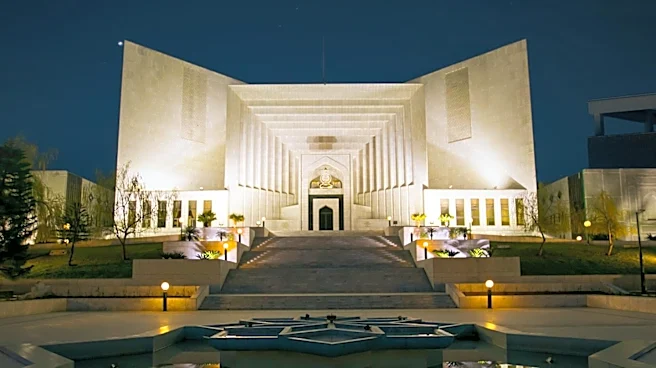
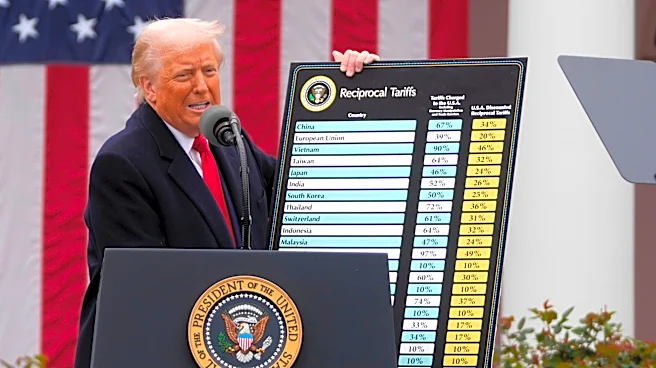
The Trump administration has refunded approximately $100 billion, which is about 60% of the $166 billion collected from tariffs imposed in 2025 under the International Emergency Economic Powers Act (IEEPA). These tariffs were struck down by the U.S. Supreme
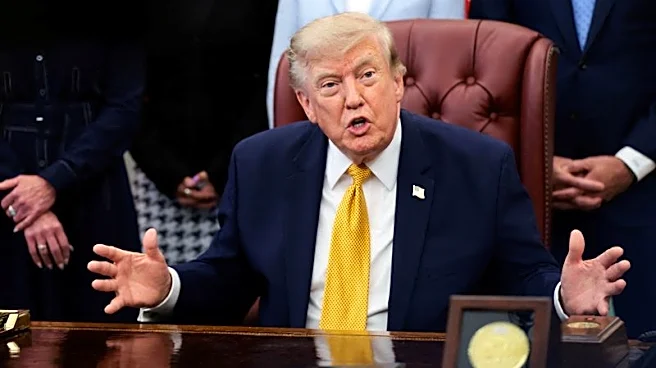
Court, which ruled that IEEPA did not authorize such tariffs. Following the ruling, a federal judge ordered that the collected tariffs be refunded to importers. Despite the setback, President Trump remains committed to tariffs as a key component of his economic and foreign policy agendas. The administration is exploring alternative legal avenues to re-establish similar tariff regimes, although these efforts are already facing legal challenges.
Why It's Important?
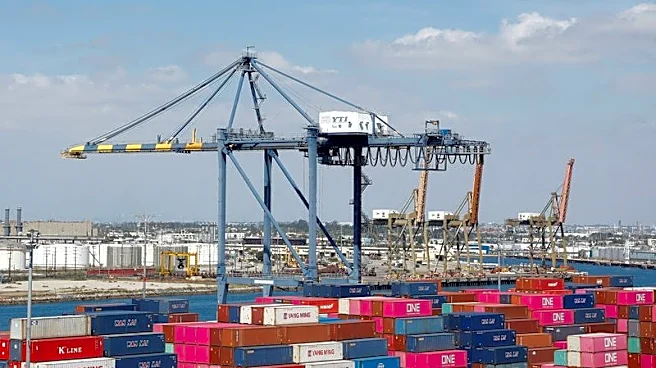
The refunding of $100 billion in tariffs marks a significant financial adjustment for both the U.S. government and importers. For importers, the refunds provide a substantial financial relief, potentially impacting pricing and supply chain decisions. For the government, the refunds represent a reversal of a major policy initiative under President Trump, highlighting the ongoing legal and political challenges associated with tariff policies. The situation underscores the complexities of using tariffs as a tool for economic policy, particularly when legal frameworks are contested. The administration's continued pursuit of tariffs, despite legal setbacks, indicates a persistent focus on protectionist trade measures, which could have long-term implications for U.S. trade relations and economic strategy.
What's Next?
The Trump administration is expected to continue seeking alternative legal mechanisms to impose tariffs, despite the Supreme Court's ruling. This could lead to further legal battles as new tariff methods are likely to face challenges in court. The outcome of these efforts will be closely watched by businesses and trade partners, as it could influence future trade policies and economic relations. Additionally, the administration's actions may prompt responses from Congress or other political entities, potentially leading to legislative efforts to clarify or restrict the use of tariffs under IEEPA or similar statutes.