
What's Happening?
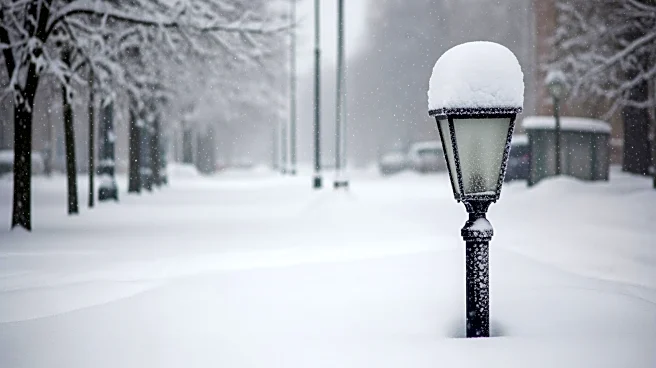
Syracuse, New York, experienced its snowiest day in nearly 80 years on Tuesday, with a relentless lake effect snowstorm depositing 24.2 inches of snow at Hancock International Airport. This snowfall not
only broke the record for December 30 but also marked the second-snowiest day since records began in 1902. The storm, characterized by wind gusts exceeding 50 mph, severely impacted visibility and city operations. Mayor Ben Walsh described it as the worst storm in years, leading to unplowed streets, delayed trash pickup, and the closure of community groups and government offices. The city has recorded 58.5 inches of snow this December, making it the fourth-snowiest December on record. Additional snowfall is expected as another storm system moves through the region.
Why It's Important?
The significant snowfall in Syracuse highlights the challenges faced by cities prone to severe winter weather. The disruption of city services and transportation underscores the need for effective snow management and emergency response plans. The economic impact is notable, as businesses and government operations are hindered, potentially affecting local commerce and daily life. The storm also serves as a reminder of the importance of infrastructure resilience in the face of extreme weather events, which are becoming more frequent and severe due to climate change. Residents and local authorities must adapt to these conditions to ensure safety and continuity of services.
What's Next?
As Syracuse continues to deal with the aftermath of the storm, city officials and residents are preparing for additional snowfall from an incoming storm system. This could further strain city resources and impact New Year's Eve plans. The city may need to implement additional snow removal measures and emergency protocols to manage the situation. Residents are advised to stay informed about weather updates and travel advisories. The ongoing weather challenges may prompt discussions on improving infrastructure and emergency preparedness to better handle future snow events.