


What's Happening?
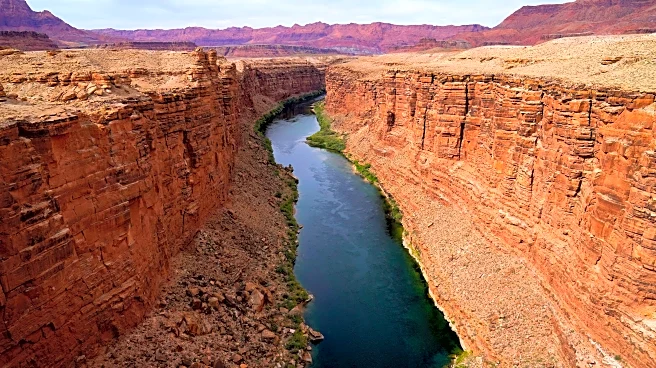
Negotiators from the seven states that rely on the Colorado River have failed to meet a mid-February deadline set by federal water managers to establish new guidelines for water sharing. The river, which is experiencing severe drought conditions due to climate
change, is a critical water source for nearly 40 million people. The states have been divided into two groups during negotiations: the Lower Basin states of Arizona, California, and Nevada, which have agreed to some mandatory cutbacks, and the Upper Basin states of Colorado, Utah, Wyoming, and New Mexico, which have not. The impasse has persisted for nearly two years, and if no agreement is reached by October, the federal government may impose its own water management rules, potentially leading to legal battles.
Why It's Important?
The failure to reach a consensus on water-sharing guidelines for the Colorado River underscores the challenges of managing shared natural resources amid climate change. The river's shrinking threatens the water supply for millions of people and could have significant economic and social impacts. The division between the Upper and Lower Basin states highlights the complexities of balancing water rights and responsibilities. If the federal government intervenes, it could lead to legal disputes and further strain relations between the states. The situation emphasizes the need for collaborative and equitable solutions to address water scarcity and ensure sustainable resource management.
What's Next?
With the deadline missed, the states face increased pressure to reach an agreement before the federal government steps in. If imposed, federal water management rules could trigger lawsuits and potentially involve the Supreme Court. State leaders are likely to continue negotiations, seeking to avoid a courtroom battle. The involvement of governors and other stakeholders may help drive progress. Additionally, federal forecasters have presented dire projections for water levels at Lake Powell, indicating potential hydropower generation issues. The states must address these immediate concerns while working towards a long-term solution.