
What's Happening?
A federal judge has postponed the U.S. trial of Abu Agila Mohammad Mas'ud Kheir Al-Marimi, a former Libyan intelligence official charged in the 1988 bombing of Pan Am Flight 103. The postponement, announced
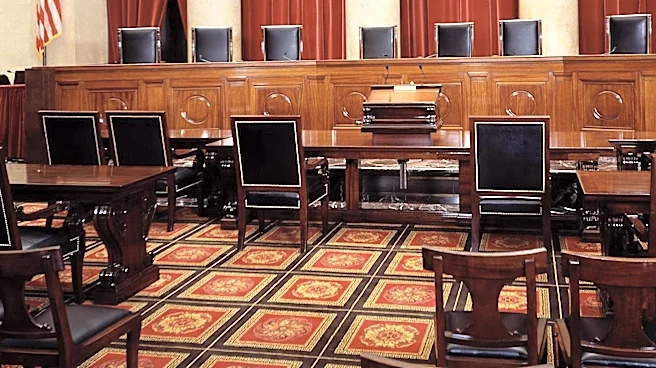
on Monday, stems from the discovery of new evidence that defense attorneys require time to examine. Al-Marimi, now in his mid-70s, is accused of constructing the bomb that led to the aircraft's destruction, killing 270 people, predominantly Americans. Jury selection for his federal trial in Washington, D.C., was initially scheduled to commence on Wednesday. This trial marks the first in the U.S. for the December 21, 1988, bombing. Prosecutors allege that Al-Marimi served as an explosives expert for the Libyan intelligence service from approximately 1973 to 2011 and was involved in transporting the bomb to an airport in Malta, from where it was eventually loaded onto Flight 103. The bombing is believed to have been orchestrated under the direction of then-Libyan leader Muammar Qaddafi.
Why It's Important?
The postponement of Al-Marimi's trial carries significant weight, particularly for the victims' families who have sought justice for nearly four decades. The Pan Am Flight 103 bombing remains one of the most lethal acts of air terrorism and a complex international terrorism investigation in U.S. history. The introduction of new evidence, even at this late stage, underscores the ongoing pursuit of truth and accountability in a case that has deeply impacted American families and international relations. For the U.S. justice system, it highlights the meticulous nature of legal proceedings, especially in high-profile international terrorism cases, where due process and the thorough examination of all evidence are paramount. The outcome of this trial could provide a definitive conclusion to a long-standing quest for justice for the victims and their relatives, many of whom were preparing to attend the trial. The case also serves as a reminder of the enduring impact of state-sponsored terrorism and the international efforts to bring perpetrators to justice.
What's Next?
Following the postponement, U.S. District Judge Dabney Friedrich has scheduled a September 1 hearing in Washington to discuss the status of the case. This hearing will likely address the nature of the newly discovered evidence and establish a revised timeline for the trial. Defense attorneys will use this period to thoroughly investigate the new information, which is crucial for preparing Al-Marimi's defense. The Victims of Pan Am Flight 103 organization, while surprised by the delay, has expressed hope that the new evidence will contribute to a more complete understanding of the events and ultimately lead to the truth. The trial, once it resumes, will continue to be closely watched by the victims' families, legal experts, and the international community, as it represents a critical step in resolving one of the most infamous acts of terrorism in modern history. The focus will be on how this new evidence impacts the prosecution's case and the defense's strategy.
Beyond the Headlines
The delay in the Lockerbie bombing trial extends beyond procedural matters, touching upon the profound and lasting impact of terrorism on individuals and international law. The case has been a symbol of the global fight against terrorism and the complexities of prosecuting such crimes across borders and decades. The involvement of a former Libyan intelligence official also brings into focus the historical role of state actors in sponsoring terrorism and the subsequent efforts to hold them accountable. For the families of the 270 victims, the trial represents not just a legal process but a deeply personal journey for closure and recognition of their loss. The continuous emergence of new evidence, even after nearly 40 years, highlights the persistent nature of investigations into major acts of terrorism and the dedication required to uncover all facts. This case also serves as a testament to the resilience of the justice system in pursuing accountability, regardless of the passage of time or geopolitical shifts.