







What's Happening?
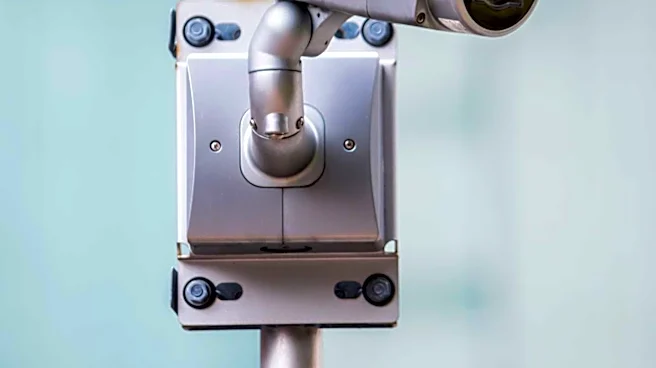
The widespread deployment of Automated License Plate Readers (ALPRs), often referred to as Flock cameras, is sparking a national debate regarding privacy and constitutional rights. While these systems have proven effective in solving crimes such as recovering
stolen vehicles and locating missing children, critics argue that their indiscriminate collection of data constitutes mass surveillance. Unlike traditional policing, which begins with evidence pointing to a suspect, ALPRs gather information on everyone first, then determine whose movements might be relevant later. This approach, facilitated by advancements in artificial intelligence, allows modern ALPR networks to identify vehicles not only by license plates but also by make, model, color, and other distinguishing characteristics. This detailed data can then be used to reconstruct an individual’s daily life, revealing patterns of movement, personal associations, and visits to various locations, including places of worship, political meetings, and medical offices. The concern is that this technology fundamentally alters the relationship between citizens and government, potentially eroding Fourth Amendment protections against unreasonable searches and seizures.
Why It's Important?
The proliferation of ALPR technology has significant implications for individual liberty and the balance between public safety and privacy in the United States. The ability of these systems to collect and analyze vast amounts of data on innocent citizens' movements raises concerns about a de facto national tracking system. This shift from targeted investigation to mass data collection challenges the core principle that free people should not live under constant observation. The argument that 'if you’ve done nothing wrong, you have nothing to hide' is being countered by the assertion that constitutional protections are for everyone, not just those accused of crimes. The issue is further complicated by the involvement of private companies in collecting and potentially monetizing this data, blurring the lines of governmental accountability. The lack of industry-wide regulations and the reliance on voluntary promises from companies like Flock to address privacy concerns mean that constitutional rights are subject to varying policies across different jurisdictions, creating an inconsistent landscape for privacy protections nationwide.
What's Next?
The ongoing debate is expected to prompt calls for legislative action at both federal and state levels. Congress and state legislatures are urged to establish clear limits on how location data from ALPRs is collected, used, retained, shared, and sold. The goal is to ensure these technologies remain focused on legitimate criminal investigations rather than routine surveillance, thereby preventing federal agencies from circumventing constitutional protections through state or privately operated networks. Lawmakers will need to address how to balance the undeniable public safety benefits of ALPRs with the imperative to safeguard individual liberties. The choices made in the coming years regarding the regulation of AI and surveillance technologies will shape the relationship between technology and freedom for future generations, determining whether innovation strengthens or erodes a free society.
Beyond the Headlines
Beyond the immediate legal and policy discussions, the widespread adoption of ALPRs and similar AI-driven surveillance technologies raises profound ethical and societal questions. The shift towards 'mass surveillance' fundamentally redefines the concept of privacy in public spaces. It challenges the traditional understanding of the Fourth Amendment, which was designed for a pre-digital era. The ability to reconstruct an individual's daily life through their movements could lead to a chilling effect on free association, political expression, and other constitutional rights, as individuals may self-censor their activities knowing they are under constant observation. The reliance on private companies for data collection also introduces questions of data security, potential misuse, and the commercialization of personal information without explicit consent. This technological advancement forces a re-evaluation of what it means to be 'free' in an increasingly interconnected and monitored society, highlighting the tension between technological progress and the preservation of foundational democratic values.