





What's Happening?
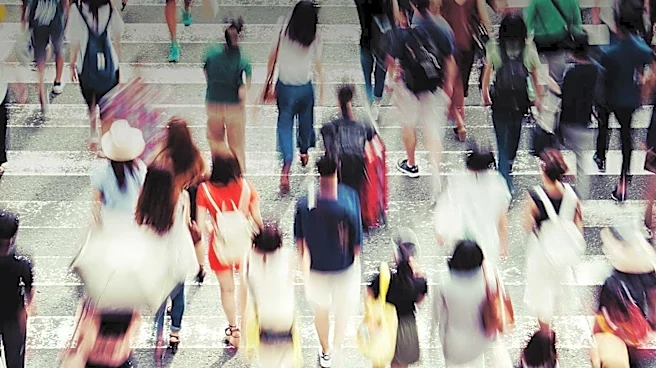
A five-year study initiated during the COVID-19 pandemic has uncovered a consistent, anticlockwise turning bias in human walking patterns within enclosed spaces. Researchers initially observed this phenomenon while studying how people navigate while maintaining
social distancing. The study found that when individuals or crowds move without a specific destination in a closed environment, they tend to rotate to the left. This emergent behavior was initially hypothesized to be influenced by factors such as wall interactions, handedness, or cultural driving conventions. However, experiments designed to test these hypotheses, including varying the handedness of participants, removing walls by conducting tests outdoors, and observing crowds in Japan (where traffic drives on the left), consistently showed the same anticlockwise bias. Even young children, who have not yet absorbed adult conventions, exhibited this strong leftward tendency. The research ultimately concluded that this bias is an individual, biomechanical feature rather than a collective or environmental one, as it persisted even when individuals walked alone in an empty arena.
Why It's Important?
This discovery challenges long-held assumptions in the field of pedestrian dynamics, which typically attribute collective patterns to interactions between individuals. The finding that the leftward bias originates at the individual level, rather than emerging from group interactions, has significant implications for urban planning, architectural design, and crowd management. Understanding this inherent human tendency can lead to more efficient and safer designs for public spaces such as airports, train stations, and museums, where the smooth flow of people is crucial. By incorporating this individual bias into models for pedestrian movement, designers can optimize layouts to prevent bottlenecks, reduce congestion, and enhance overall user experience. Furthermore, the study suggests that this leftward tilt might be a deeply ingrained, ancient biological trait, as similar behaviors are observed in schooling fish and army ants, hinting at a fundamental aspect of movement across various species.
What's Next?
While the study has identified the existence and individual origin of this leftward walking bias, the precise reason for it remains unknown. Researchers plan to continue investigating the underlying causes, exploring potential links to biomechanical factors or subtle asymmetries within the human body, such as those in the inner ear that might affect our sense of straightness. Future research may involve more detailed physiological studies and neurological examinations to pinpoint the exact mechanism responsible for this consistent turning preference. The insights gained from these investigations could further refine models for pedestrian flow and inform the design of future public infrastructure, potentially leading to more intuitive and less stressful navigation for large groups of people. Additionally, exploring this phenomenon in diverse populations and environments could reveal whether there are any cultural or environmental modifiers to this seemingly universal individual trait.
Beyond the Headlines
The revelation that a fundamental aspect of human movement, like a consistent turning bias, is an individual rather than a collective phenomenon, prompts a re-evaluation of how we perceive and design our shared environments. This finding transcends mere logistical improvements; it touches upon the deeper understanding of human biology and behavior. The persistence of this bias across different cultures and even in young children suggests a deeply ingrained, possibly evolutionary, trait. This could imply that our physical environment, from the layout of cities to the design of buildings, has inadvertently been shaped by or has adapted to this inherent human tendency. The study's mention of similar leftward tilts in animal behavior, such as schooling fish and army ants, opens up fascinating avenues for interdisciplinary research, suggesting a common biological principle governing movement across species. This could lead to a more holistic understanding of how living organisms navigate their surroundings and interact with space, potentially influencing fields from robotics to behavioral psychology.