



What's Happening?
A federal appeals court has reinstated a First Amendment lawsuit involving a California first grader, identified as B.B., who claims she was punished for giving a drawing to a Black classmate that referenced Black Lives Matter. The U.S. Court of Appeals
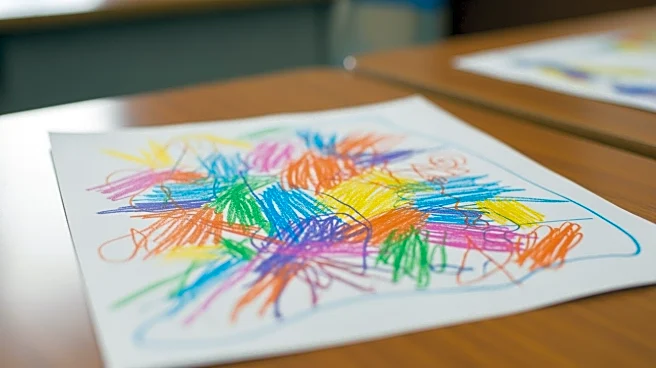
for the 9th Circuit ruled that elementary students have free-expression rights under the First Amendment, aligning with other federal appeals courts that apply the Tinker v. Des Moines decision to younger students. The case began in 2021 when B.B. gave a drawing to her classmate, M.C., which included the phrase 'Black Lives Mater' and 'any life.' M.C.'s mother raised concerns with the school, believing B.B.'s actions were innocent. The lawsuit alleges that the school principal labeled the drawing as inappropriate and racist, leading to B.B. being barred from recess. The 9th Circuit found that the lower court erred in granting summary judgment to the defendants, as there were disputed facts about whether B.B. was punished.
Why It's Important?
This case underscores the ongoing debate over the extent of free speech rights for elementary school students. The 9th Circuit's decision reinforces that young students are entitled to First Amendment protections, potentially influencing how schools handle student expression. The ruling may impact school policies nationwide, requiring administrators to carefully balance student rights with maintaining a safe and inclusive environment. The case also highlights the sensitivity surrounding racial issues in educational settings, as well as the challenges schools face in addressing them without infringing on students' rights. The outcome could set a precedent for similar cases, affecting how schools across the U.S. manage student speech related to social and political issues.
What's Next?
The case will return to the lower court for further proceedings to determine if B.B. was indeed punished for her drawing. If it is found that she was not punished, her First Amendment claim may fail. The decision could prompt schools to review their policies on student expression, particularly regarding sensitive topics like race. School districts may need to provide additional training for staff to handle such situations appropriately, ensuring that student rights are respected while maintaining a supportive educational environment. The case may also lead to increased awareness and discussion about the role of free speech in elementary education.