
What's Happening?
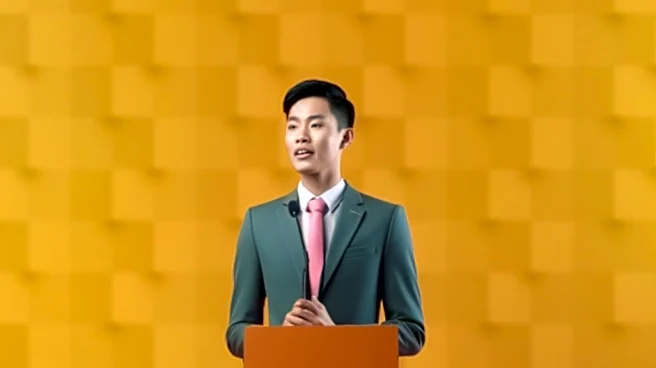
U.S. Rep. Derrick Van Orden, a Republican from Wisconsin, has faced criticism for repeatedly posting deepfake videos of his Democratic challenger, Rebecca Cooke. One such video depicted a fabricated version
of Cooke making controversial statements, accompanied by Van Orden's caption, 'I wish this was a joke.' While not explicitly illegal, these actions are seen as undermining the intent of Wisconsin's state law, which specifically targets AI-generated deepfake videos in political advertising. The law, signed by Gov. Tony Evers in March 2024, requires political videos containing synthetic media to include a clear written disclosure: 'This video content generated by AI.' Van Orden's deepfake videos, however, lack this explicit on-screen language, though the platform X (formerly Twitter) includes a small print stating 'Made with Grok imaging.' Critics argue that Van Orden's use of deepfakes raises ethical concerns about the use of AI in political campaigns and the potential for misleading voters.
Why It's Important?
The use of AI deepfakes by a U.S. Representative in a political campaign highlights significant concerns regarding the integrity of democratic processes and the spread of misinformation. Wisconsin's proactive legislation against political deepfakes underscores a growing recognition of the technology's potential to distort public discourse and manipulate voter perception. Van Orden's actions, despite not directly violating the letter of the law due to the videos not being paid advertising, are seen as flouting its spirit. This situation sets a precedent that could encourage other politicians to exploit loopholes in emerging AI regulations, making it harder for voters to distinguish between fact and fiction. The ethical implications extend beyond the immediate election, raising questions about the long-term impact of AI on political campaigns, public trust, and the potential for malicious actors to create highly convincing, yet entirely false, narratives about candidates.
What's Next?
The ongoing controversy surrounding U.S. Rep. Van Orden's use of deepfakes is likely to intensify as the election cycle progresses. His Democratic challenger, Rebecca Cooke, and other political figures have already condemned these tactics, calling for stronger guardrails on AI technology in politics. This incident could prompt further legislative efforts at both state and federal levels to close loopholes in existing deepfake laws and establish clearer guidelines for the ethical use of AI in political communication. Major social media platforms may also face increased pressure to implement more robust content moderation policies to identify and label AI-generated content, especially in political contexts. The debate will likely continue to focus on balancing free speech with the need to protect voters from deceptive practices, potentially leading to new legal challenges and public discourse on the future of AI in elections.
Beyond the Headlines
The controversy surrounding U.S. Rep. Van Orden's use of deepfakes delves into deeper societal implications concerning the erosion of trust in media and political figures. The ability of AI to generate highly realistic but fabricated content challenges the fundamental concept of verifiable truth, which is crucial for a functioning democracy. This issue extends beyond mere political tactics, touching upon the broader ethical responsibilities of public officials in an age of rapidly advancing technology. The ease with which deepfakes can be created and disseminated raises questions about digital literacy among the electorate and the potential for sophisticated disinformation campaigns to sway public opinion. Furthermore, the specific concern about men using AI to depict women in potentially unethical ways highlights gendered dimensions of technological misuse, adding another layer of complexity to the debate about online harassment and the weaponization of digital tools.