






What's Happening?
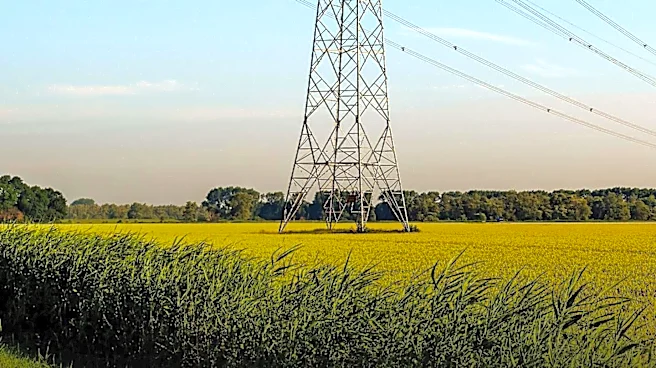
German police in Saxony have discovered a total of 21 homemade explosive devices in a wooded area under a power line, near the Graustein substation in the eastern German district of Goerlitz. This discovery follows a series of sabotage attacks on the power grid
last week. Authorities are currently searching for a man who sent letters claiming responsibility for these attacks and who remains at large after explosives were reportedly found at his home. The initial findings regarding a fire at a transformer substation in Berlin, which was also under investigation, indicate it was caused by a technical fault, not sabotage. However, police in the western city of Wesel are investigating after a security fence around another transformer substation was found cut open.
Why It's Important?
This incident highlights the increasing vulnerability of critical infrastructure, particularly power grids, to sabotage. Germany has been a focal point for European concerns regarding such vulnerabilities, especially after a drone attack in August at Leipzig/Halle, which the government attributed to Russia. The discovery of multiple explosive devices underscores a deliberate and organized threat to energy security. Such attacks can lead to widespread power outages, disrupting daily life, economic activities, and essential services. The ongoing search for the individual claiming responsibility and the investigation into other potential incidents suggest a broader pattern of threats that could impact national security and public confidence in infrastructure resilience across Europe.
What's Next?
German authorities will continue their intensive search for the man claiming responsibility for the sabotage attacks. Investigations will likely focus on identifying any accomplices and understanding the full scope of the plot. Security measures around critical infrastructure, especially power grids, are expected to be heightened across Germany to prevent future incidents. There may also be increased collaboration among European nations to address the shared threat of infrastructure sabotage, particularly in light of recent geopolitical tensions. The ongoing assessment of the cut security fence in Wesel indicates that the threat may not be isolated to Saxony, prompting broader security reviews and potential policy changes regarding infrastructure protection.
Beyond the Headlines
The repeated incidents targeting Germany's power grid, including the drone attack attributed to Russia and the discovery of these explosives, point to a potential shift in tactics for destabilizing nations. Beyond immediate power disruptions, such acts can sow public fear, erode trust in government's ability to protect essential services, and create economic instability. The nature of these attacks, involving homemade explosives and claims of responsibility, suggests a blend of domestic and potentially foreign-influenced threats. This situation could prompt a re-evaluation of cybersecurity and physical security protocols for critical infrastructure, not just in Germany but across NATO and EU member states, as the definition of warfare expands beyond conventional military engagements to include hybrid threats and infrastructure targeting.