



What's Happening?
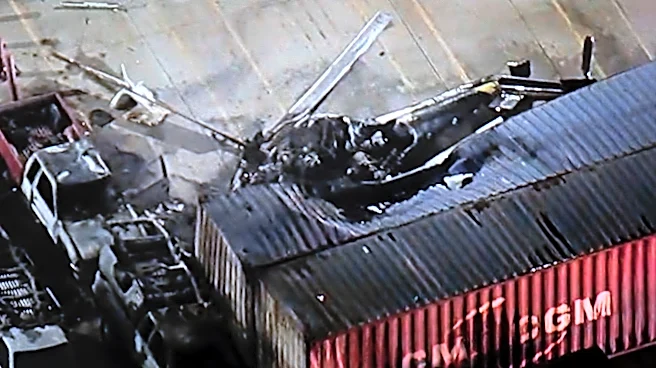
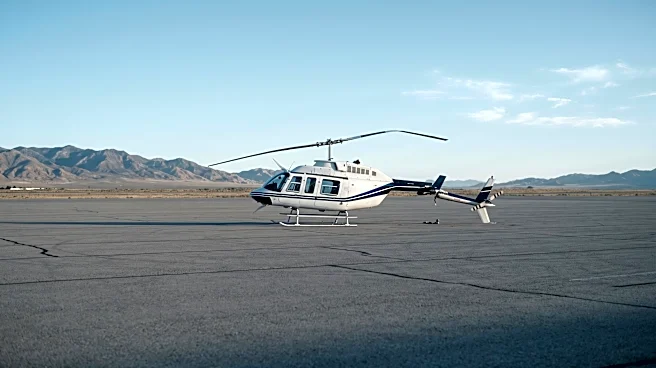
Newly released video footage shows a helicopter crash that occurred during a flight lesson at Cedar City Regional Airport in Utah earlier this year. The National Transportation Safety Board (NTSB) released the video after concluding its investigation
into the May 23 incident. Miraculously, neither the Southern Utah University Aviation instructor nor the student sustained serious injuries. The NTSB's investigation determined that the crash was caused by the 32-year-old instructor losing control of the Bell 206L helicopter while attempting to adjust the engine governor. This action led to the helicopter moving backward and descending, striking the ground, becoming airborne again, and then impacting the ground a second time. Security camera footage depicts the helicopter hovering, then shooting up and spinning, with its tail shearing off upon hitting the tarmac before the main body came to rest.
Why It's Important?
This incident highlights critical safety considerations within aviation training programs, particularly concerning the importance of maintaining control during routine adjustments. The NTSB's findings underscore the human factor in aviation accidents, even in controlled training environments. The fact that both the instructor and student escaped serious injury is a testament to modern helicopter safety features and emergency response protocols, but the event serves as a stark reminder of the inherent risks involved in flight instruction. For aviation schools like Southern Utah University Aviation, this incident will likely prompt a review of training procedures, instructor protocols, and emergency response drills to prevent similar occurrences and ensure the highest safety standards for students and instructors alike. It also emphasizes the need for continuous training and adherence to established safety guidelines.
What's Next?
Following the NTSB's conclusion that the instructor's actions caused the crash, Southern Utah University Aviation will likely review its training curriculum and instructor oversight. There may be internal investigations or disciplinary actions taken against the instructor, depending on university policy and aviation regulations. The incident could also lead to enhanced simulator training or revised procedures for adjusting critical controls during flight lessons. Furthermore, the NTSB's report and the released video will serve as valuable case studies for aviation safety organizations and flight schools nationwide, contributing to broader discussions on best practices for flight instruction and emergency preparedness. The focus will be on implementing lessons learned to improve safety and prevent future accidents in aviation training.
Beyond the Headlines
Beyond the immediate safety implications, this incident touches upon the psychological aspects of flight training, where instructors must balance teaching complex maneuvers with maintaining absolute control in dynamic environments. The pressure on instructors to perform flawlessly while guiding students can be immense. This event also raises questions about the design and ergonomics of helicopter cockpits, specifically how controls are positioned and accessed, and whether certain adjustments could be made more intuitively or with less risk of accidental input. The public release of such video footage, while providing transparency, also serves as a powerful visual reminder of the precision and skill required in aviation, potentially influencing public perception of flight safety and the rigorous training involved in becoming a pilot.