
What's Happening?
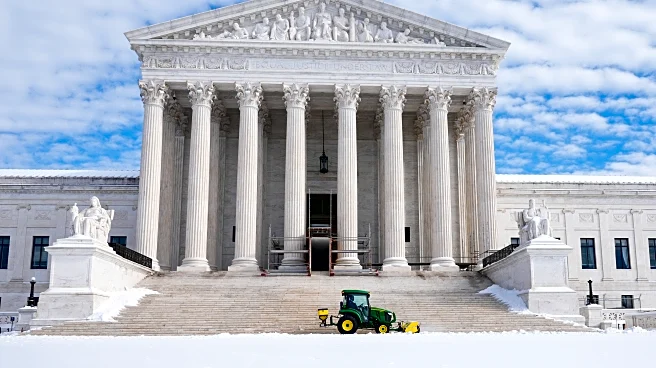
The Supreme Court is currently deliberating a case that could significantly expand presidential powers, specifically regarding the ability of President Trump to dismiss a Federal Trade Commission (FTC)
commissioner without cause. This case represents a pivotal moment in the interpretation of executive authority, as the court's conservative majority appears inclined to support increased presidential control over independent agencies. The arguments presented on Monday focused on whether the president should have the authority to remove certain agency members at will, a move that could reshape the balance of power between the executive branch and independent regulatory bodies.
Why It's Important?
This case is crucial as it could redefine the scope of presidential authority over independent agencies, potentially altering the landscape of U.S. governance. If the Supreme Court rules in favor of President Trump, it would set a precedent for future presidents to exert more direct control over regulatory bodies, which are traditionally designed to operate with a degree of independence from political influence. This could lead to significant changes in how these agencies function, impacting their ability to regulate industries and enforce laws without political interference. Stakeholders in various sectors, including business and consumer advocacy groups, are closely watching the outcome, as it could affect regulatory stability and predictability.
What's Next?
Should the Supreme Court decide in favor of expanding presidential powers, it is likely that there will be increased scrutiny and debate over the role and independence of regulatory agencies. Political leaders and civil society groups may push for legislative measures to either reinforce or counterbalance the court's decision. Additionally, this ruling could prompt further legal challenges and discussions about the separation of powers and the checks and balances system that underpins U.S. governance.