



What's Happening?
A recent study published in Science Advances by researchers from the Okinawa Institute of Science and Technology (OIST) has uncovered that the Late Ordovician Mass Extinction (LOME), which occurred approximately 445 million years ago, was pivotal in the rise
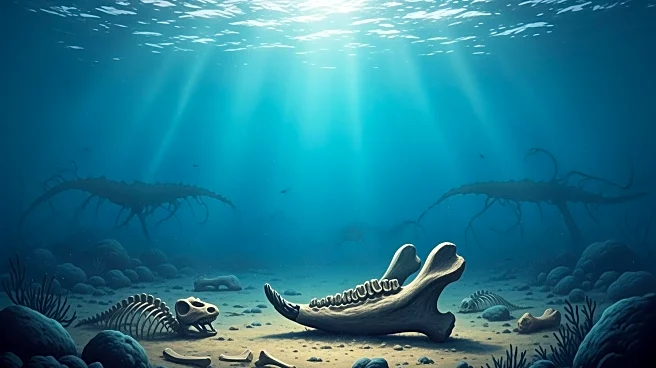
of jawed vertebrates. This extinction event, characterized by a rapid climate shift from a greenhouse to an icehouse state, led to the extinction of about 85% of marine species. The study highlights that this mass extinction event created ecological niches that allowed jawed vertebrates to thrive and eventually dominate marine life. The research involved compiling a comprehensive fossil database, which demonstrated that the extinction event directly contributed to a significant increase in the biodiversity of jawed vertebrates.
Why It's Important?
The findings of this study are significant as they provide insights into how mass extinction events can reshape the evolutionary trajectory of life on Earth. By understanding the mechanisms that allowed jawed vertebrates to dominate, scientists can better comprehend the processes of evolution and biodiversity. This research also underscores the importance of ecological niches in evolutionary history, showing how species can adapt and diversify in response to environmental changes. The study's implications extend to modern biodiversity conservation, as it highlights the potential for species to adapt to changing environments, a crucial consideration in the context of current climate change challenges.
What's Next?
The study opens avenues for further research into the evolutionary history of vertebrates and the role of mass extinction events in shaping biodiversity. Future studies may focus on exploring other mass extinction events to understand their impact on the evolution of different species. Additionally, researchers may investigate the specific ecological and environmental factors that facilitated the dominance of jawed vertebrates post-extinction. This could involve examining the genetic and morphological adaptations that enabled these species to exploit new ecological niches.
Beyond the Headlines
The study also raises questions about the long-term impacts of mass extinction events on the evolutionary pathways of life. It suggests that such events can act as catalysts for evolutionary innovation, leading to the emergence of new species and ecological structures. This perspective challenges the traditional view of extinction as purely destructive, highlighting its potential role in driving evolutionary progress. The research also emphasizes the interconnectedness of climate, ecology, and evolution, providing a framework for understanding how past events can inform current and future biodiversity patterns.