
What's Happening?
Researchers from the University of Edinburgh and National Museums Scotland have identified a new form of life from a 370 million-year-old fossil found in Scotland. The organism, named Prototaxites, was
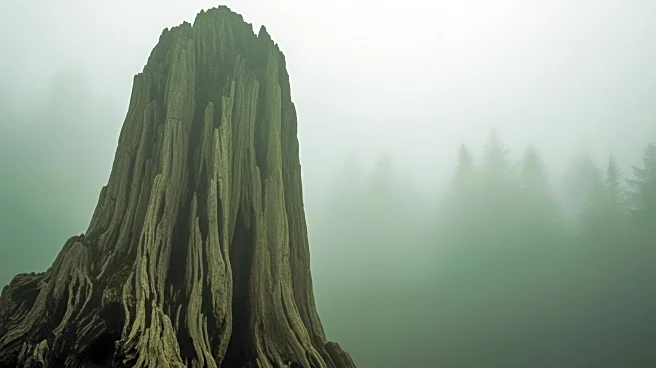
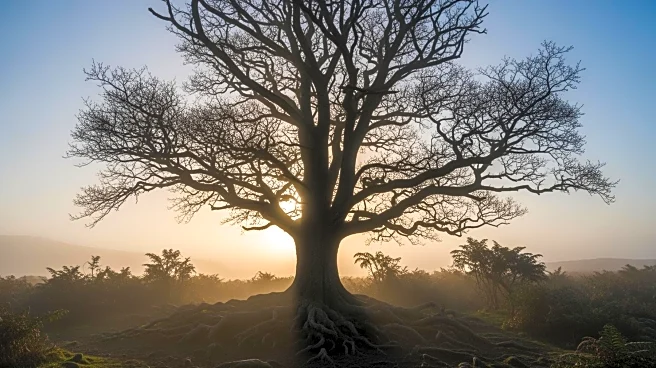
initially thought to be a fungus or a plant. However, recent studies reveal that it belongs to an entirely extinct evolutionary branch, distinct from both fungi and plants. The fossil, resembling a giant tree trunk without leaves, was first collected in 1843 and has been the subject of debate regarding its classification. The new research analyzed the molecular composition of the fossils, showing that Prototaxites did not rely on photosynthesis or symbiotic relationships for energy, unlike known plants or fungi. This discovery challenges previous understandings of the tree of life and suggests a unique evolutionary path.
Why It's Important?
The discovery of Prototaxites as a new lifeform has significant implications for the scientific community, particularly in the fields of paleontology and evolutionary biology. It challenges existing classifications and suggests that there may be other unknown branches of life that have yet to be discovered. This finding could lead to a reevaluation of the evolutionary history of life on Earth, providing new insights into how life forms have adapted and evolved over millions of years. It also highlights the importance of continued research and exploration in uncovering the mysteries of ancient life, which can inform our understanding of biodiversity and the resilience of ecosystems.