





What's Happening?
NASA has officially concluded the MAVEN (Mars Atmosphere and Volatile Evolution) mission after more than 11 years of operation. The spacecraft, which was dedicated to studying the Martian atmosphere, lost signal on December 6, following an unexpected
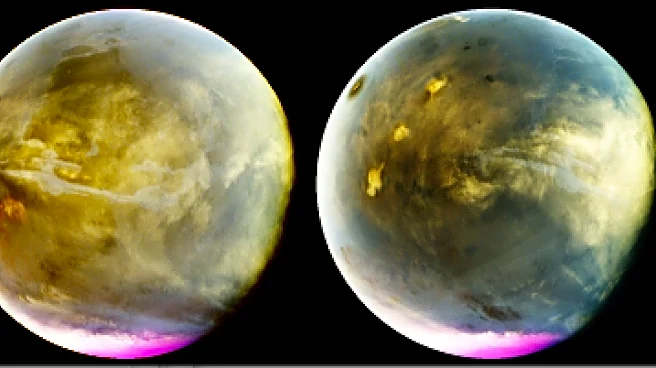
disruption in its orbit. An anomaly review board determined that MAVEN is no longer recoverable due to drained batteries and loss of communication power. Despite the end of the mission, MAVEN has provided significant insights into Mars' atmospheric evolution, including the effects of solar storms and atmospheric sputtering. NASA will host a media teleconference to discuss the mission's achievements and the decommissioning process.
Why It's Important?
The MAVEN mission has been crucial in advancing our understanding of Mars' atmosphere and its evolution. The data collected has informed radiation protection and safety measures for future human missions to Mars. MAVEN's findings on atmospheric loss and solar wind effects have provided valuable insights into the planet's climate history and habitability. The mission's contributions to the Mars Relay Network have also facilitated communication between Mars rovers and Earth, enhancing exploration capabilities. The scientific community will continue to benefit from MAVEN's archived data, which will support ongoing research and exploration efforts.
What's Next?
NASA is in the process of decommissioning the MAVEN mission, following standard procedures to archive the full dataset for future scientific use. The anomaly review board is expected to release a final report later this year, which may provide further insights into the root cause of the spacecraft's failure. The teleconference will offer an opportunity for media and stakeholders to discuss the mission's impact and future implications for Mars exploration. NASA's Mars Exploration Program will continue to leverage MAVEN's findings in planning and executing future missions to the Red Planet.
Beyond the Headlines
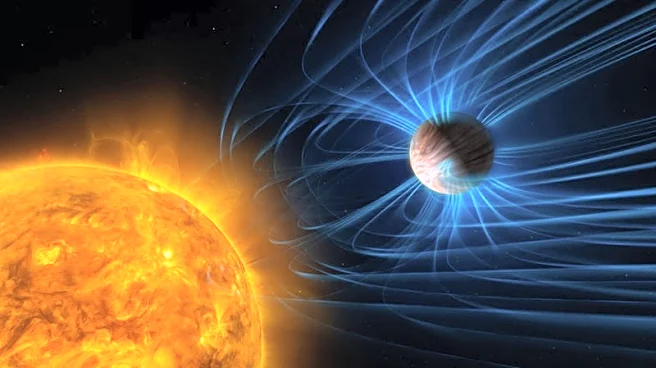
MAVEN's discoveries have broader implications for understanding planetary atmospheres and their interactions with solar activity. The mission's study of auroras and atmospheric sputtering has expanded knowledge of space weather effects on planetary environments. These insights are not only relevant for Mars but also for comparative studies of other planets and their potential habitability. MAVEN's contributions to comet observation further demonstrate the spacecraft's versatility and the interconnected nature of planetary science research.