







What's Happening?
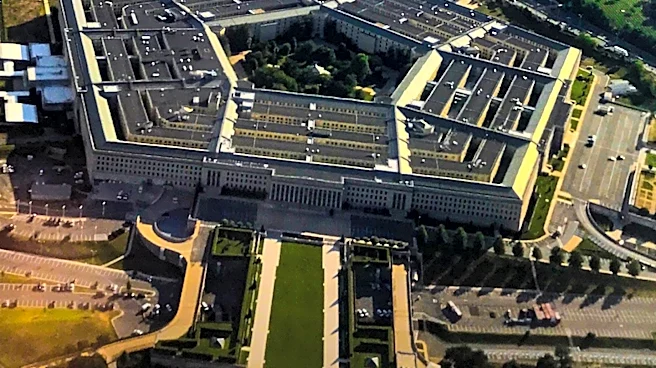
The Pentagon has launched 'FORTRESS America,' an initiative aimed at stockpiling critical minerals, fuel, and munitions on U.S. soil to ensure military operations can continue even if domestic power grids and manufacturing supply chains are disrupted
by cyberattacks or sabotage. This program, formally established on September 30, is designed to enable U.S. forces to operate for 90 days without relying on external grids. The U.S. defense industry is heavily dependent on foreign supply chains for raw materials, particularly rare-earth magnets. In 2025, the U.S. imported approximately $60 billion worth of critical minerals, excluding rare earths. Domestic sources supplied only 300 metric tons of the 48,000 metric tons of rare-earth magnets demanded in 2025, with capacity projected to reach only about 5,000 metric tons by the end of this year. China's dominance in critical mineral processing has led to shortages for American companies, even during peacetime. The initiative reflects growing concerns that U.S. factories could become targets, with U.S. agencies having previously warned of Chinese state-sponsored hackers infiltrating American critical infrastructure.
Why It's Important?
The FORTRESS America initiative is crucial for U.S. national security and economic resilience. The significant reliance on foreign, particularly Chinese, supply chains for critical minerals poses a substantial vulnerability to the U.S. defense industry and broader manufacturing sectors. Disruptions, whether from geopolitical tensions, cyberattacks, or natural disasters, could severely impede military readiness and economic stability. The program aims to mitigate these risks by building domestic reserves and fostering U.S. mining and processing capabilities. This shift towards domestic stockpiling, rather than overseas reserves, underscores a strategic re-evaluation of national defense in an era of complex threats. The current shortage of rare-earth magnets has already impacted U.S. manufacturers, as evidenced by Ford idling its Chicago Explorer plant due to supply issues. Securing these materials is vital for advanced technologies, including electric vehicles and renewable energy infrastructure, making this a critical step towards broader economic independence and technological leadership.
What's Next?
The Pentagon is exploring public-private partnerships to help fund the FORTRESS America initiative, which could cost hundreds of billions of dollars. However, analysts caution that achieving supply chain independence will take many years due to the structural difficulties of rapidly building both finished weapons and raw mineral reserves. Starting January 1, 2027, federal regulations will require defense contractors to cease purchasing rare earths, magnets, and tungsten from China, Russia, Iran, and North Korea. Despite this, waivers have been repeatedly granted due to insufficient domestic supply. The Elmet Group, a tungsten manufacturer, secured a Defense Logistics Agency contract worth up to $2 billion, but deliveries won't begin until new production from investments in Nevada, Australia, and Spain comes online. This highlights the challenge that signing supply contracts does not immediately translate into available minerals. The first true test of the initiative's effectiveness will be the ability to meet the 2027 deadline for reducing reliance on adversarial nations.
Beyond the Headlines
The FORTRESS America initiative signals a profound shift in U.S. strategic thinking, moving beyond traditional military defense to encompass economic and industrial resilience. The emphasis on domestic stockpiling and production capacity reflects a recognition that modern warfare and geopolitical competition extend to critical resources and supply chain control. This could lead to increased investment in U.S. mining, processing, and manufacturing sectors, potentially revitalizing domestic industries and creating jobs. However, it also raises questions about the environmental impact of increased mining within the U.S. and the ethical considerations of resource extraction. The long-term success of this initiative will depend not only on financial investment but also on overcoming regulatory hurdles, technological challenges, and securing public support for domestic resource development. The program's scale and ambition suggest a fundamental reorientation of U.S. industrial policy, aiming to reduce vulnerabilities and enhance national sovereignty in a multipolar world.