
What's Happening?
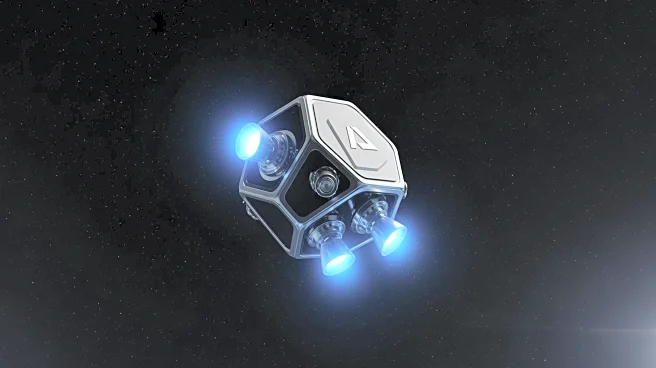
NASA has deployed the Dual Propulsion Experiment (DUPLEX) CubeSat from the International Space Station to test two innovative micropropulsion technologies in space. The CubeSat features a fiber-fed pulsed
plasma thruster system and a monofilament vaporization propulsion system, both designed to provide efficient thrust with minimal fuel usage. These systems aim to enhance the maneuverability and operational capabilities of small spacecraft in low Earth orbit. The DUPLEX mission will demonstrate the ability to maintain and adjust orbits, avoid debris, and perform coordinated maneuvers, potentially extending the operational life of spacecraft and enabling cost-effective missions to the Moon and Mars.
Why It's Important?
The development of advanced micropropulsion technologies is crucial for the growing low Earth orbit economy, as they offer more affordable and efficient solutions for spacecraft operations. By improving the ability to maneuver and maintain orbits, these technologies can enhance the safety and longevity of satellites and other space assets. This advancement supports NASA's broader goals of expanding human presence in space and fostering commercial opportunities. The success of the DUPLEX mission could lead to widespread adoption of these propulsion systems, benefiting both government and private sector space initiatives.
What's Next?
Over the next two years, the DUPLEX CubeSat will continue to test its propulsion systems, providing valuable data on their performance and reliability. The results could inform the design and development of future spacecraft, potentially leading to new commercial applications and partnerships. As the space industry continues to evolve, the integration of these technologies could play a key role in enabling more ambitious missions and supporting the infrastructure needed for sustained human and robotic exploration beyond Earth.