


What's Happening?
President Trump has announced new tariffs on eight European countries, including Denmark, Norway, Sweden, France, Germany, the UK, the Netherlands, and Finland, as part of an effort to pressure these nations into agreeing to the U.S. purchase of Greenland.
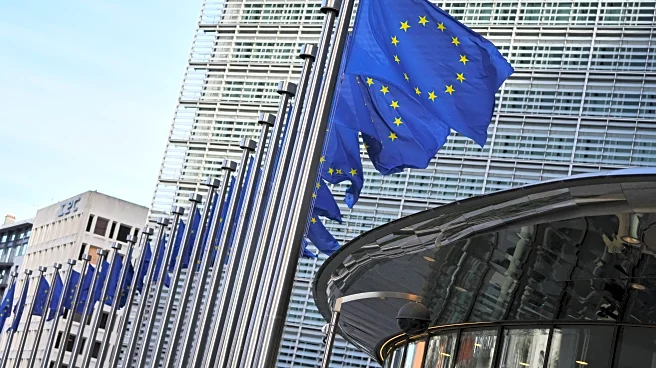
The tariffs, starting at 10% and increasing to 25% by June 1, have been met with strong opposition from European leaders, who view the move as an unacceptable escalation. The situation has prompted emergency meetings among European nations, with leaders condemning the tariffs and warning of serious consequences for transatlantic relations. The tariffs are part of a broader strategy by the Trump administration to assert U.S. interests in the Arctic region.
Why It's Important?
The tariffs represent a significant challenge to U.S.-European relations, potentially leading to economic and diplomatic fallout. The move could undermine NATO unity and strain alliances, as European countries rally to support Denmark and Greenland. The situation highlights the strategic importance of the Arctic region and the geopolitical tensions surrounding territorial claims. The tariffs also raise questions about the use of economic measures as a tool of foreign policy, with potential implications for global trade dynamics and international cooperation.
What's Next?
European leaders are expected to hold emergency meetings to discuss their response, which may include retaliatory tariffs or other measures. The situation could lead to prolonged diplomatic negotiations, with both sides seeking to avoid further escalation. The U.S. administration may face domestic and international pressure to reconsider its approach, particularly if the tariffs lead to economic disruptions. The outcome of these developments will likely have significant implications for U.S.-Europe relations and the broader geopolitical landscape.