





What's Happening?
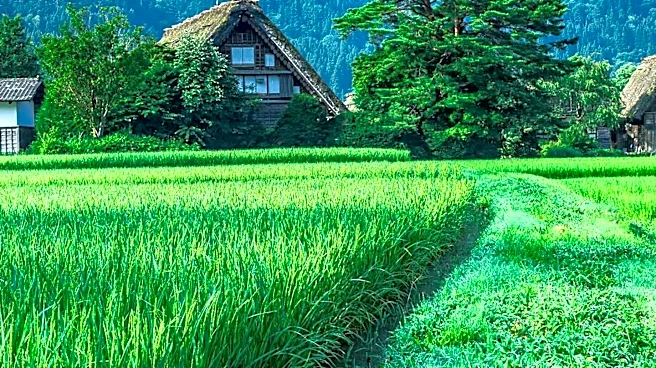
Japan is currently experiencing a severe heatwave, marking its fifth consecutive day of extreme temperatures reaching around 40 degrees Celsius. This prolonged heat is significantly impacting agricultural production, particularly rice crops, as well as vegetables
and livestock. The high temperatures are not only reducing crop yields but also affecting their quality. In response, Japanese authorities have expanded temperature warning systems and designated heat shelters to mitigate health risks. The heatwave coincides with the peak tourist season and summer holidays, prompting advisories for people to limit outdoor activities and stay hydrated. The economic impact is also notable, with increased electricity consumption due to higher demand for air conditioning, and disruptions in construction and logistics sectors.
Why It's Important?
The ongoing heatwave in Japan underscores the vulnerability of agricultural sectors to climate extremes, which can have far-reaching implications for food security and economic stability. The reduction in rice yields could affect both domestic supply and international markets, given Japan's role as a significant rice producer. Additionally, the strain on electricity resources highlights the challenges of energy management during extreme weather events. The situation also raises concerns about public health, particularly for vulnerable populations such as the elderly and those without access to air conditioning. This event serves as a reminder of the urgent need for climate adaptation strategies to protect both human and economic health.
What's Next?
As the heatwave continues, Japanese authorities are likely to maintain and possibly expand their current measures to protect public health and manage energy consumption. There may be increased focus on long-term climate adaptation strategies, such as enhancing infrastructure to withstand extreme temperatures and improving agricultural practices to ensure food security. The situation could also prompt discussions on international cooperation in addressing climate change and its impacts on global food systems.
Beyond the Headlines
The heatwave in Japan highlights the broader issue of climate change and its impact on traditional agricultural practices. The need for innovative solutions to maintain crop yields under changing climate conditions is becoming increasingly urgent. This situation also brings attention to the cultural and economic significance of rice in Japan, emphasizing the potential social impacts of reduced production. Furthermore, the event may influence public policy and investment in renewable energy sources to reduce reliance on air conditioning and improve energy efficiency.