






What's Happening?
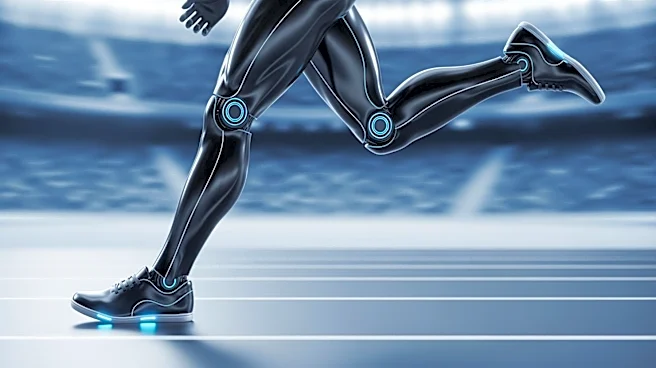
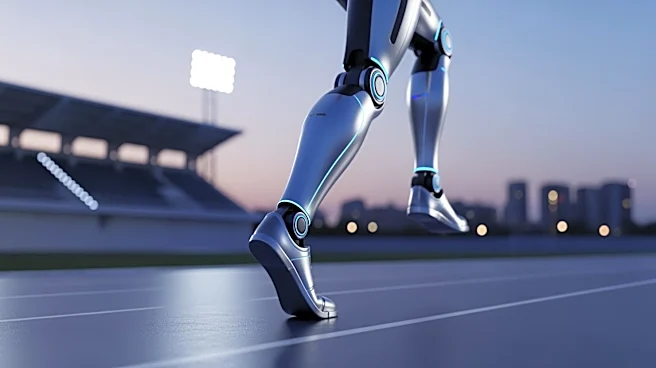
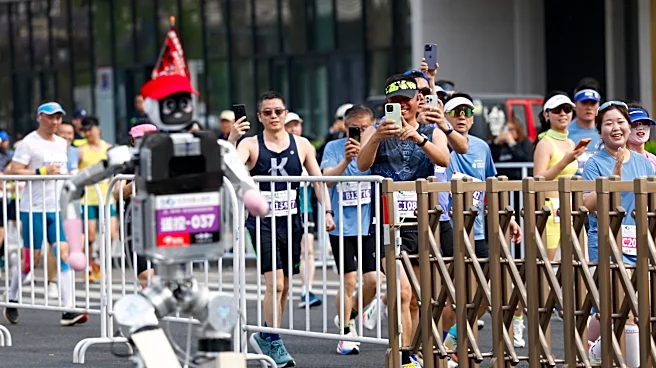
A humanoid robot named Lightning, designed by Chinese smartphone brand Honor, set a new half-marathon record in Beijing, completing the race in 50 minutes and 26 seconds. This time surpasses the previous human record by over six minutes. Lightning was
one of over 100 robots participating in the race, which took place in the Beijing Economic-Technological Development Area. The robot's success is attributed to its advanced design, including joints equipped with a liquid-cooling system adapted from Honor's smartphones. The event marks a significant step in the development and application of humanoid robots, showcasing their potential beyond research and development prototypes.
Why It's Important?
The achievement of Lightning highlights China's rapid advancements in robotics, positioning the country as a leader in the field. The successful deployment of humanoid robots in real-world applications could revolutionize various industries, from logistics to healthcare. The race demonstrates the potential for robots to perform tasks traditionally done by humans, which could lead to increased efficiency and productivity. However, it also raises questions about the future of human labor and the ethical implications of widespread robot deployment.
What's Next?
The success of Lightning and similar robots could accelerate the transition of humanoid robots from prototypes to large-scale deployment. This may prompt other countries to invest more heavily in robotics research and development to remain competitive. The event also sets the stage for future competitions and showcases, which could further drive innovation and public interest in robotics. As robots become more integrated into society, discussions around regulation, safety, and ethical considerations will likely intensify.