






What's Happening?
In September, Civil Air Patrol (CAP) members in New Orleans undertook a unique mission, collecting a 'mosaic city' of ground observations for NASA's Plankton, Aerosol, Cloud, ocean Ecosystem (PACE) satellite. This initiative involved at least 50 volunteers
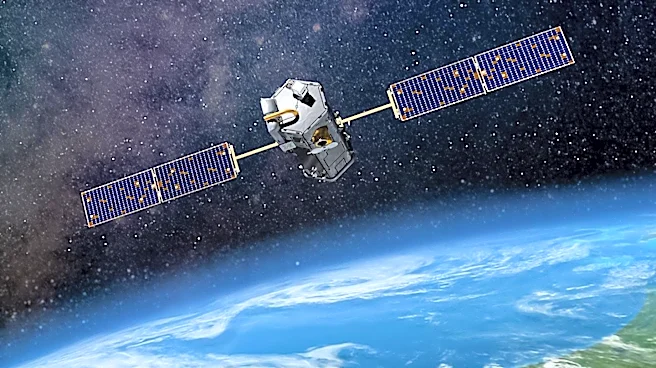
stationed across the city, recording cloud observations within 30 seconds of each other using the GLOBE Observer App. Each observation acts as a 'pixel,' which NASA then stitches together to create a larger image for comparison with data captured by the PACE satellite. NASA launched the PACE satellite in February 2024 to study Earth’s oceans and atmosphere, including clouds and airborne particles that influence weather and climate. The ground-based observations are crucial for scientists to verify that satellite instrument reports align with real-world conditions. This 'mosaic city' challenge is part of a growing partnership between CAP and NASA, which has engaged over 3,500 volunteers this year across all 52 CAP wings.
Why It's Important?
This collaborative effort between the Civil Air Patrol and NASA is vital for enhancing the accuracy of climate and weather modeling. By providing ground-truth data, CAP volunteers help NASA scientists validate the observations made by the PACE satellite, particularly regarding cloud detection and properties. Satellites offer a broad view, but ground-level data is essential for understanding nuances like cloud edges and broken cloud formations, which are difficult for satellites to precisely interpret. This citizen science approach significantly expands NASA's data collection capabilities, leveraging a large network of dedicated volunteers. The success of the 'mosaic city' challenge demonstrates the effectiveness of coordinated community involvement in scientific research, providing valuable data that directly contributes to a better understanding of Earth's climate systems and atmospheric processes. This partnership also fosters scientific engagement among the public, particularly youth, through hands-on participation in real-world scientific missions.
What's Next?
Lessons learned from the New Orleans PACE Pilot Data Collection Challenge are being used by CAP and NASA to design the upcoming PACE Precision Mission, scheduled for spring 2027. For this future mission, CAP squadrons will field teams of at least 10 members on specific weekends in March, April, May, and June 2027. Registration and training materials for the 2027 PACE Precision Mission will become available on January 1, 2027. This ongoing collaboration aims to further refine data collection methodologies and expand the scope of citizen science contributions to NASA's Earth science programs. The continued involvement of CAP volunteers will provide critical ground-based data, enhancing the scientific community's ability to analyze and interpret satellite observations related to clouds, aerosols, and ocean ecosystems, ultimately contributing to more accurate climate models and weather predictions.
Beyond the Headlines
The Civil Air Patrol's 'mosaic city' initiative highlights the increasing role of citizen science in advancing complex scientific research. This model of distributed data collection, where numerous individuals contribute small pieces of information that collectively form a comprehensive dataset, is becoming invaluable for large-scale environmental monitoring. Beyond the immediate scientific benefits, such programs foster a deeper connection between the public and scientific endeavors, promoting scientific literacy and engagement. The use of the incident command system (ICS) by CAP, typically reserved for emergency response, demonstrates its adaptability and effectiveness in organizing large-scale scientific missions, a methodology that NASA has recognized as a significant strength. This approach could serve as a blueprint for future citizen science projects, enabling broader participation and more efficient data gathering for various scientific disciplines, thereby democratizing scientific research and its impact.