







What's Happening?
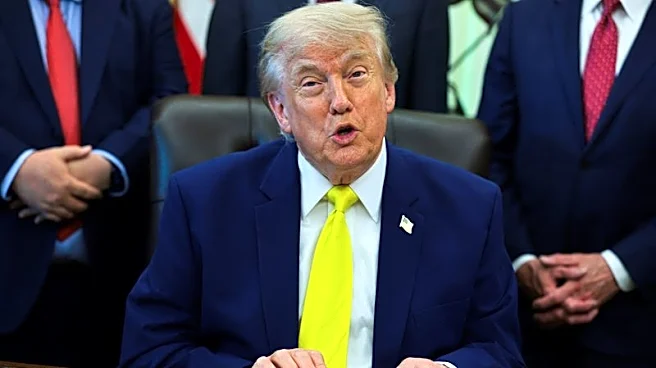
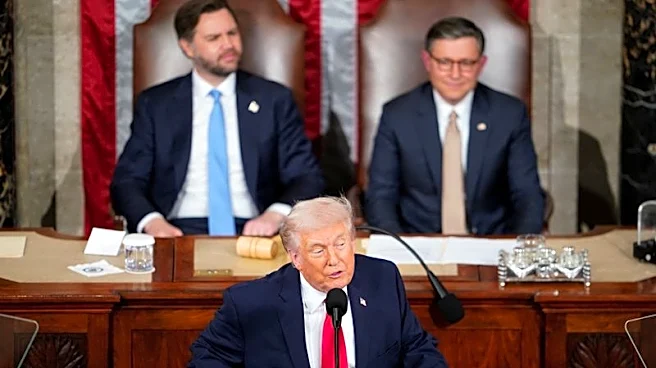
President Trump is facing scrutiny over his leadership style and its impact on his legacy. The article discusses how Trump's approach, characterized by conflict and loyalty tests, contrasts with that of former President Ronald Reagan, who left a lasting
legacy through optimism and unity within the Republican Party. Trump's recent actions, such as appointing Bill Pulte, a housing official with no intelligence background, to oversee the nation's spy agencies, have raised concerns about his decision-making. The article highlights that Trump's coalition, which he assembled, is at risk of not outlasting his presidency due to his focus on personal loyalty over broader party interests.
Why It's Important?
The significance of this development lies in its potential impact on the Republican Party and U.S. politics. Trump's leadership style, which prioritizes personal loyalty and conflict, may undermine the party's cohesion and long-term success. By focusing on short-term victories and personal loyalty, Trump risks alienating key allies and failing to build a sustainable political movement. This approach could lead to a weakened Republican Party, unable to maintain its influence after Trump's presidency. The article suggests that without a clear successor or a unifying vision, Trump's legacy may be remembered as one of division rather than lasting change.
What's Next?
Looking ahead, the Republican Party faces the challenge of defining its future beyond Trump's presidency. The party must decide whether to continue embracing Trump's leadership style or to seek a more unifying approach that can appeal to a broader electorate. Key figures within the party may need to step forward to offer alternative visions and leadership. Additionally, Trump's ability to maintain influence over the party will depend on his actions in the coming years and whether he can successfully navigate the political landscape to secure his legacy.
Beyond the Headlines
The deeper implications of Trump's leadership style include potential shifts in the Republican Party's identity and its ability to attract diverse voters. The focus on loyalty and conflict may alienate moderate and independent voters, limiting the party's appeal. Furthermore, the lack of a clear successor raises questions about the party's future direction and stability. The article suggests that for the Republican Party to thrive, it must balance Trump's influence with a broader, more inclusive vision that can endure beyond his presidency.