




What's Happening?
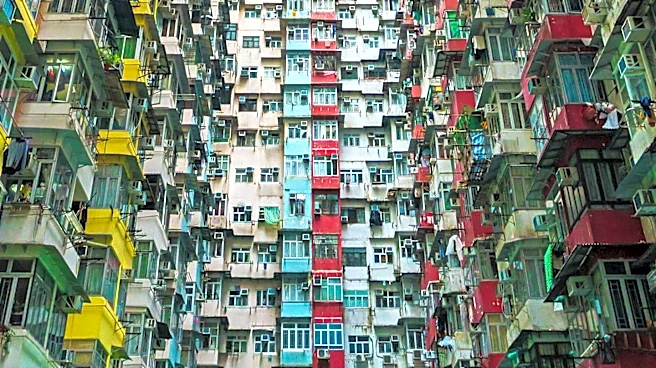
The Kowloon Walled City in Hong Kong, once the densest place on Earth, was demolished in the early 1990s. This self-built maze of 350 towers housed approximately 33,000 people within a six and a half acre area. The city was a result of a legal anomaly,
existing due to a lack of administrative enforcement by both British and Chinese authorities. Over time, it became a densely packed settlement with buildings reaching up to 14 stories, constrained by the proximity to Kai Tak Airport. The Hong Kong government announced its demolition in 1987, offering compensation to residents. Demolition began in 1993 and concluded in 1994, making way for the Kowloon Walled City Park, which opened in 1995. The park now serves as a historical site, preserving remnants of the city's past, including the yamen building and the Old South Gate.
Why It's Important?
The demolition of Kowloon Walled City marked the end of an era for one of the most unique urban settlements in history. Its existence highlighted issues of urban planning, governance, and the challenges of managing densely populated areas without formal oversight. The transformation of the site into a park reflects a shift towards preserving historical sites while addressing urban development needs. This change has implications for urban policy, particularly in managing informal settlements and integrating them into the broader urban fabric. The legacy of Kowloon Walled City continues to influence discussions on urban density, architectural innovation, and the balance between development and heritage preservation.
What's Next?
The Kowloon Walled City Park continues to serve as a cultural and historical landmark, attracting visitors interested in its unique history. The site offers educational opportunities about urban development and historical preservation. As urban areas worldwide face increasing population pressures, the lessons from Kowloon Walled City may inform future urban planning strategies, particularly in managing high-density living conditions. The park's ongoing maintenance and the preservation of its historical elements will remain a priority for local authorities, ensuring that the legacy of the Walled City is not forgotten.
Beyond the Headlines
The story of Kowloon Walled City raises broader questions about the role of informal settlements in urban environments. It challenges traditional notions of urban planning and governance, demonstrating how communities can self-organize in the absence of formal structures. The Walled City's history also underscores the importance of cultural and historical preservation in rapidly developing urban areas. As cities continue to grow, balancing development with the preservation of unique historical sites will be crucial in maintaining cultural heritage and identity.