


What's Happening?
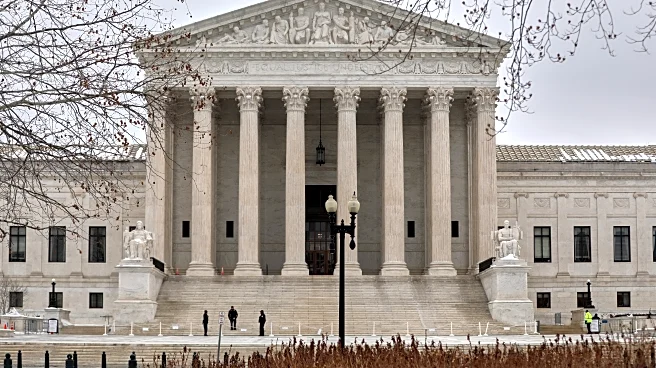
The U.S. Supreme Court has ruled against President Trump's authority to impose sweeping tariffs on nearly every country under a federal emergency powers law. This decision marks a significant limitation on the executive power to unilaterally enact such
economic measures. The ruling comes after challenges were raised regarding the legality of these tariffs, which were initially justified under the guise of national security concerns. The court's decision underscores the necessity for a more balanced approach involving legislative oversight in the imposition of tariffs, which have broad implications for international trade and domestic economic policy.
Why It's Important?
This ruling is pivotal as it curtails the executive branch's ability to unilaterally impose tariffs, which can have far-reaching effects on international trade relations and domestic industries. By requiring more stringent checks and balances, the decision could lead to more stable and predictable trade policies, benefiting businesses that rely on international supply chains. It also reinforces the role of Congress in trade policy, potentially leading to more comprehensive and deliberative economic strategies. The decision may impact ongoing and future trade negotiations, as it signals a shift towards more collaborative policy-making processes.
What's Next?
Following the Supreme Court's decision, there may be increased legislative activity as Congress seeks to assert its role in trade policy. This could involve drafting new legislation to clarify the scope of executive powers in economic matters. Additionally, businesses and trade partners may adjust their strategies in anticipation of more stable trade policies. The ruling could also prompt further legal challenges to other executive actions perceived as overreaching, potentially reshaping the balance of power between the branches of government.