








What's Happening?
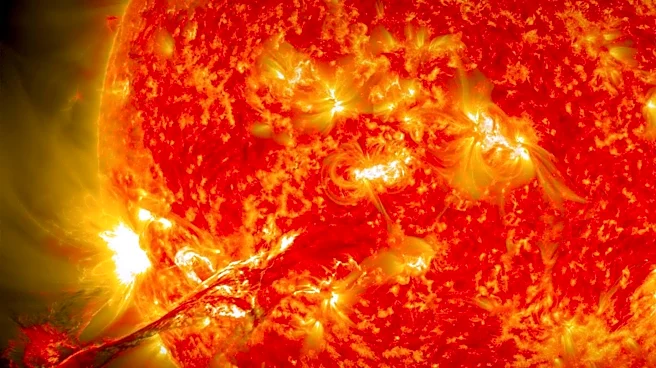
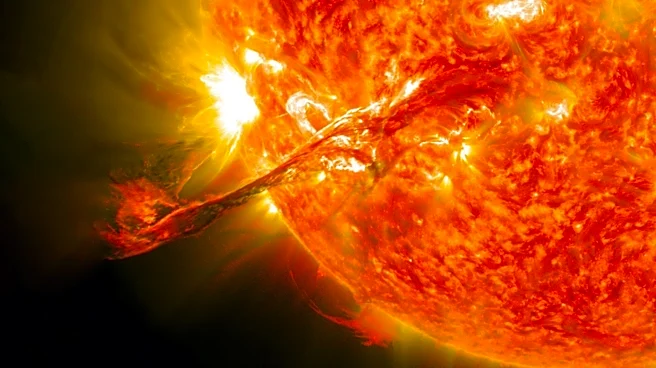
The sun has emitted 10 M-class solar flares within 24 hours, accompanied by coronal mass ejections (CMEs) that are partially Earth-directed. These solar activities could lead to G1-G2 geomagnetic storm conditions, potentially making the northern lights
visible across parts of the northern U.S., including New York and Idaho, during the July 4 weekend. The intensity of the auroras will depend on the interaction of the CMEs with Earth's magnetic field. Space weather forecasters are monitoring the situation to predict the potential impact on geomagnetic activity and aurora visibility.
Why It's Important?
The increased solar activity and potential for visible auroras highlight the dynamic nature of space weather and its effects on Earth. Geomagnetic storms can impact satellite operations, power grids, and communication systems, making it crucial for industries and governments to monitor and prepare for such events. Additionally, the potential visibility of the northern lights in more southern regions offers a unique opportunity for residents and tourists to witness this natural phenomenon, promoting interest in space science and astronomy.
What's Next?
Space weather forecasters will continue to analyze the incoming CMEs to refine predictions about their impact on Earth's magnetic field. Observers in the northern U.S. are advised to monitor local weather conditions and aurora alerts to maximize their chances of witnessing the northern lights. Meanwhile, scientists will study the solar flares and CMEs to improve understanding of solar activity and its effects on Earth's space environment, contributing to better forecasting and mitigation strategies for future space weather events.