




What's Happening?
A federal judge in Maryland has ruled that the Trump administration cannot reverse its decision to move the Federal Bureau of Investigation's (FBI) headquarters to Greenbelt, Maryland. The ruling permanently blocks the administration's plan from July
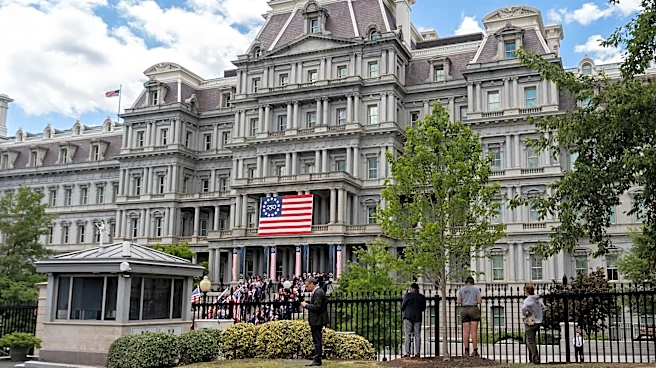
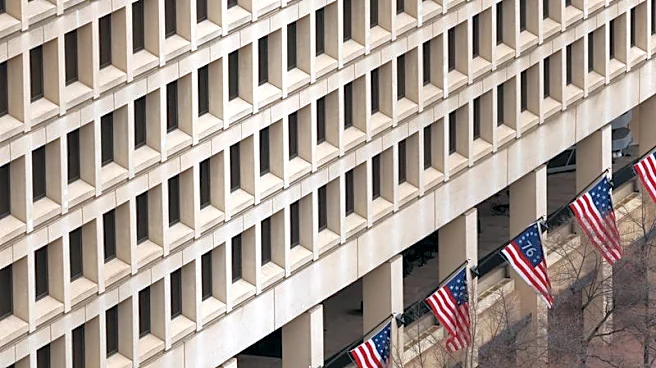
2025 to relocate the law enforcement agency to offices at the Ronald Reagan Building in Washington D.C. The original plan, approved by the General Services Administration (GSA), was to move the FBI Headquarters from the aging J. Edgar Hoover Building to a new location in Greenbelt. However, President Trump had stated in early 2025 that he would cancel the Greenbelt project, leading the GSA to select the Ronald Reagan Building instead. The judge's decision sided with Prince George's County and Maryland officials, who argued that canceling the Greenbelt project would deprive them of long-term economic benefits. The court found that President Trump needed congressional approval to alter the plan and reallocate funds intended for the Maryland project.
Why It's Important?
This ruling is important as it upholds a significant federal development project and has substantial economic implications for Prince George's County and the state of Maryland. The move of the FBI headquarters to Greenbelt is expected to bring considerable economic benefits, including job creation, increased tax revenue, and local business growth. The judge's decision ensures that these anticipated benefits can proceed, preventing a major economic setback for the region. Furthermore, the ruling underscores the legal boundaries of executive power, particularly concerning federal appropriations and congressionally approved projects. It reinforces the principle that major changes to such projects often require legislative consent, preventing unilateral executive actions that could undermine established plans and commitments. This case highlights the checks and balances within the U.S. government and the judiciary's role in enforcing them.
What's Next?
Federal officials are expected to appeal the judge's ruling, indicating that the legal battle over the FBI headquarters' relocation may continue. Despite the appeal, the court's decision currently clears the path for the Greenbelt project to move forward as originally planned. Maryland Attorney General Anthony Brown stated that the ruling has "cleared the path back to Greenbelt." The FBI, in a statement, indicated it would "not be deterred" and would continue to pursue the best course of action to meet law enforcement needs, suggesting a potential for continued resistance or alternative strategies. The search for a new headquarters began in 2011 due to the poor conditions of the Hoover Building, and the Senate had previously mandated that the new building be within specific proximity to a Metro Station and the Capital Beltway. The Greenbelt site meets these criteria, being 17 miles from the Hoover building.
Beyond the Headlines
This legal battle delves into the complex interplay between executive authority, congressional oversight, and judicial review in large-scale federal projects. The dispute over the FBI headquarters' location is not merely about real estate; it reflects broader tensions regarding government efficiency, regional economic development, and political influence. The Trump administration's attempt to redirect funds and alter the project highlights the potential for political considerations to impact long-term strategic planning for federal agencies. The judge's emphasis on congressional approval for such changes reinforces the constitutional framework designed to prevent arbitrary executive actions. This case could set a precedent for how future administrations approach large federal infrastructure projects, emphasizing the need for adherence to established legal processes and inter-branch cooperation. It also underscores the significant economic and political stakes involved when federal agencies consider major relocations, impacting local economies and political landscapes for decades.