






What's Happening?
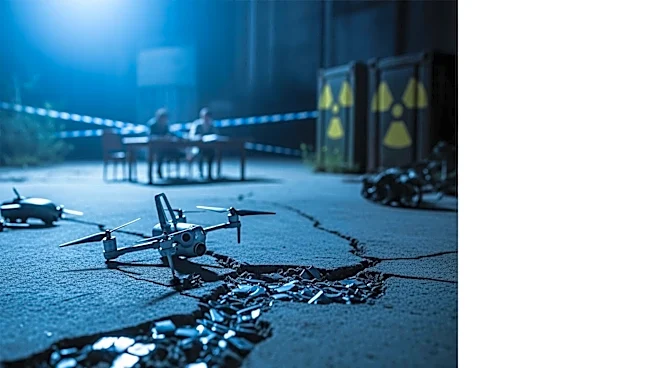
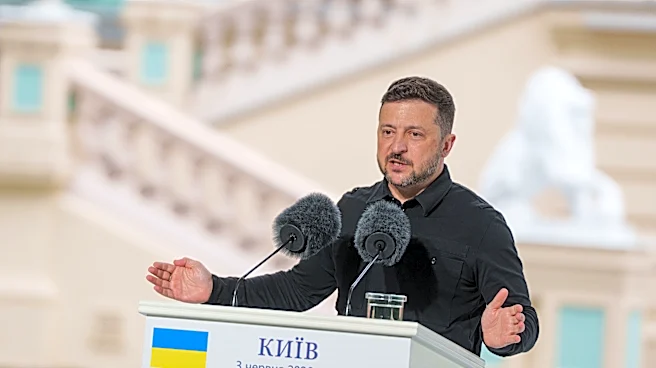
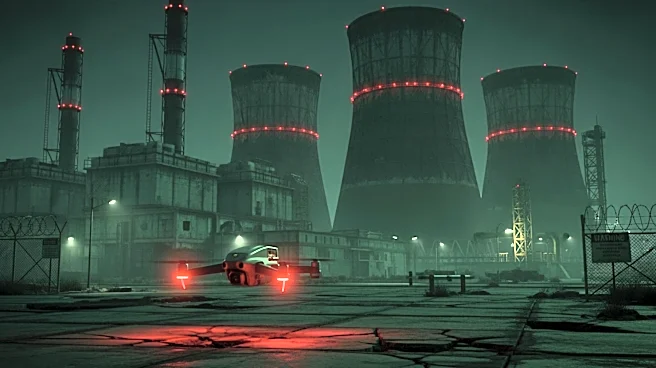
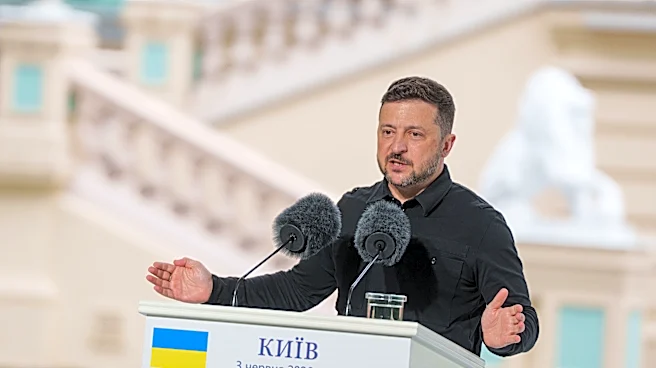
A Russian drone has reportedly targeted a storage facility for spent nuclear fuel near the Chornobyl nuclear power plant in Ukraine. President Volodymyr Zelenskyy condemned the attack as 'extremely vile,' although it did not result in a radiation spike.
The International Atomic Energy Agency (IAEA) confirmed that the strike caused significant damage to a fuel-reception building, which is located near large amounts of nuclear material. Fortunately, no spent fuel was present in the building at the time, and a fire caused by the attack was extinguished without injuries. The incident adds to the ongoing tensions between Ukraine and Russia, with both countries previously accusing each other of attacks on nuclear facilities.
Why It's Important?
The attack underscores the heightened risks associated with military actions near nuclear sites, raising international concerns about nuclear safety and security. The Chornobyl site, infamous for the 1986 nuclear disaster, remains a sensitive area due to its historical and environmental significance. The incident could exacerbate geopolitical tensions, potentially influencing international diplomatic and military strategies. It also highlights the vulnerability of critical infrastructure in conflict zones, prompting discussions on the need for enhanced protective measures and international oversight to prevent potential nuclear catastrophes.
What's Next?
The IAEA plans to send a team to inspect the site and assess the impact of the attack. This inspection could lead to further international diplomatic engagements aimed at ensuring the safety of nuclear facilities in conflict areas. The incident may prompt Ukraine to seek additional international support to bolster its defense capabilities against such attacks. Meanwhile, the global community may increase pressure on Russia to adhere to international norms regarding the protection of nuclear sites.