



What's Happening?
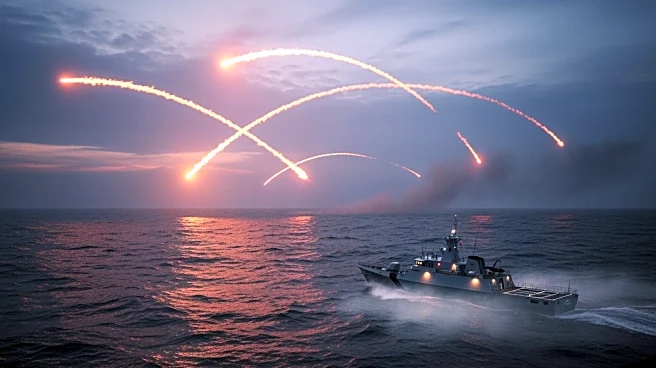
Chinese forces fired three flares from an artificial island towards a Philippine patrol plane conducting a routine surveillance mission in the disputed South China Sea. The incident occurred near Subi Reef, one of the seven disputed reefs in the Spratly
Islands, which China has developed into military bases. The Philippine coast guard reported that the flares did not disrupt the mission, which aimed to monitor marine environments and ensure the safety of Filipino fishermen. The patrol also observed a Chinese hospital ship, two coast guard ships, and 29 suspected militia ships in the area. The United States, while not a claimant in the South China Sea, has reiterated its commitment to defend the Philippines under mutual defense treaties.
Why It's Important?
The South China Sea is a critical global trade route, and China's assertive actions in the region have raised international concerns about freedom of navigation and regional stability. The firing of flares at a Philippine aircraft underscores the ongoing territorial disputes and the potential for military confrontations. The incident highlights the strategic importance of the South China Sea and the geopolitical tensions involving China, the Philippines, and other regional players. The U.S. has a vested interest in maintaining open sea lanes and has pledged to support its allies, which could lead to increased military presence and diplomatic efforts to de-escalate tensions.
What's Next?
The incident may prompt diplomatic protests from the Philippines and calls for international mediation to address the territorial disputes. The U.S. might increase its patrols in the region to assert freedom of navigation. ASEAN countries involved in the disputes, such as Vietnam and Malaysia, may seek to strengthen their alliances and military capabilities. The situation could lead to further negotiations or, conversely, escalate into more aggressive posturing by China to assert its claims.