




What's Happening?
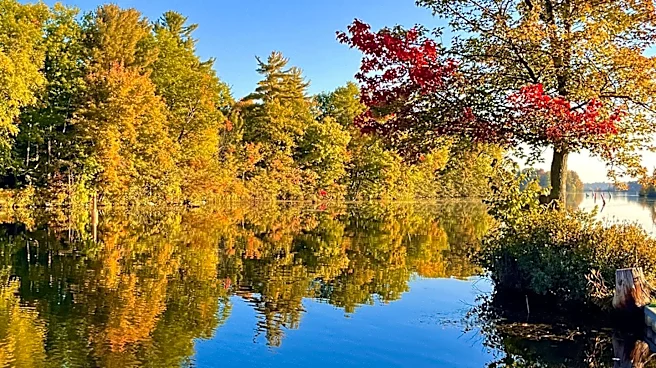
The Arkansas Department of Agriculture has reported that trees across eastern Arkansas are exhibiting fall colors, such as yellow and brown, earlier than usual. Chandler Barton, from the department, stated that while an official cause has not been assessed,
extended periods of high heat and prolonged drought are likely contributing factors. This early color change is a stress response where trees shed leaves that are no longer efficient for photosynthesis, a mechanism to conserve energy and prevent the tree from dying. Barton clarified that this does not necessarily mean the entire tree is dying, but rather it is protecting itself. However, he noted that if evergreen trees, particularly pine trees, begin to change color, it could indicate a more severe problem, as they are typically expected to remain green year-round. Yard trees might also be more significantly affected due to being outside their natural environment. Despite some recent rainfall in parts of northeast Arkansas, much of the region continues to experience drought conditions, according to the latest U.S. Drought Monitor.
Why It's Important?
The early onset of fall colors in Arkansas trees serves as a significant environmental indicator, highlighting the impact of climate stressors like prolonged heat and drought on local ecosystems. This phenomenon is important because it signals potential widespread tree stress, which could lead to increased tree mortality if conditions do not improve. A decline in tree health can have cascading effects on local biodiversity, soil stability, and water retention, potentially exacerbating drought conditions and increasing the risk of wildfires. For agricultural sectors, particularly those reliant on healthy forest ecosystems or shade for livestock, this could translate into economic losses. Furthermore, the aesthetic impact of early leaf changes could affect tourism in areas known for fall foliage. The situation underscores the vulnerability of natural landscapes to changing weather patterns and emphasizes the need for ongoing monitoring and potential mitigation strategies to support forest health.
What's Next?
The Arkansas Department of Agriculture plans to conduct a full assessment of any tree damage resulting from the drought next spring. This assessment will provide a clearer picture of the long-term impact of the current stress conditions on the state's tree population. In the interim, residents and landowners might consider measures to support stressed trees, such as targeted watering where feasible and permissible under drought restrictions. Continued monitoring of drought conditions by the U.S. Drought Monitor will be crucial for understanding the evolving environmental context. The department's findings next year will likely inform future forestry management practices and public awareness campaigns regarding tree health and climate resilience. The early leaf changes serve as a warning sign, indicating that while tree deaths are possible, they are not a certainty, and the full extent of the damage will only become apparent over time.
Beyond the Headlines
The early changing of leaf colors in Arkansas extends beyond a mere seasonal anomaly; it represents a tangible manifestation of broader ecological shifts influenced by climate patterns. This event highlights the intricate relationship between environmental conditions and plant physiology, demonstrating how trees adapt to survive adverse circumstances by shedding leaves to conserve energy. The distinction between deciduous and evergreen trees' responses to stress also underscores the varied resilience within different species. This situation could prompt deeper discussions about urban forestry practices, the selection of drought-resistant tree species for planting, and the overall ecological footprint of human activities. It also subtly reinforces the scientific understanding of climate change impacts, even if not explicitly stated as such in the immediate context. The visual cue of early fall colors could serve as a powerful, albeit subtle, reminder to the public about the ongoing environmental challenges and the importance of ecological stewardship.