


What's Happening?
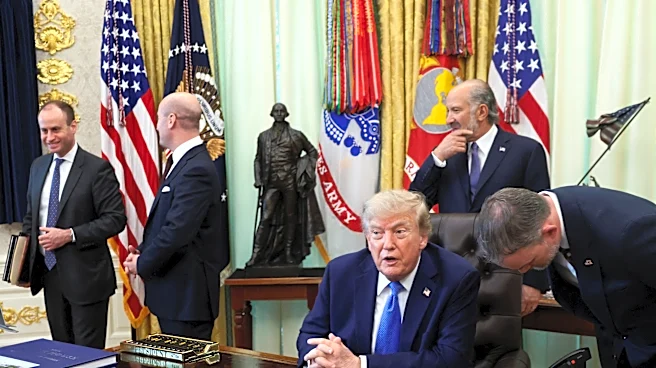
President Trump has intensified his rhetoric against Democratic candidates by labeling them as 'jihadists' during a conversation with reporters in the Oval Office. This statement follows the Democratic primary victory of Abdul El-Sayyed, a Muslim candidate in Michigan.
Trump's comments have been criticized for contributing to anti-Muslim sentiment and potentially endangering Muslim officials. Other Republican figures, such as Rep. Nancy Mace and Senator Tommy Tuberville, have echoed similar sentiments, further fueling the controversy. The remarks have sparked concerns about the safety of Muslim public officials and the impact of such rhetoric on the political climate.
Why It's Important?
President Trump's statements reflect a broader pattern of Islamophobic rhetoric that has been prevalent in some political circles. This rhetoric can have serious implications, including increasing the risk of violence against Muslim communities and influencing public perceptions of Muslim candidates. It also highlights the challenges faced by Muslim Americans in political life, as they navigate a landscape where their identity is often politicized. The use of such language by high-profile political figures can legitimize discriminatory attitudes and policies, potentially affecting social cohesion and civil rights.
What's Next?
As the U.S. approaches the midterm elections, the political discourse is likely to become more polarized, with potential implications for voter turnout and party dynamics. Civil rights organizations and advocacy groups may intensify their efforts to combat Islamophobia and promote inclusivity. The response from the Democratic Party and its candidates will be crucial in shaping the narrative and addressing the concerns raised by such rhetoric. The outcome of the elections could influence the future direction of U.S. politics and the role of identity in political campaigns.