





What's Happening?
The Venezuelan government has signed agreements with U.S. energy firms Hunt Overseas Oil Company and Crossover Energy to operate in the Orinoco Belt, a major oil-producing region. This development follows the capture of Nicolas Maduro and the easing of U.S. sanctions
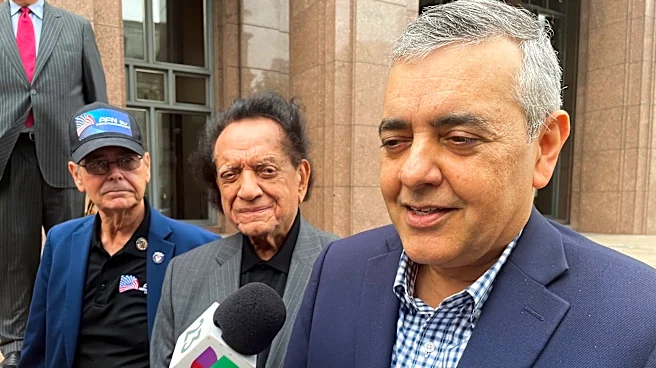
on Venezuela's state oil firm PDVSA. The agreements were signed in the presence of Jarrod Agen, President Trump's energy adviser. European companies like Eni, Repsol, and BP are also returning to Venezuela, aiming to boost oil and gas production. U.S. firms ExxonMobil and ConocoPhillips have sent teams to evaluate opportunities in the country.
Why It's Important?
The return of U.S. and European oil companies to Venezuela marks a significant shift in the geopolitical landscape of the global energy market. With Venezuela holding the world's largest crude oil reserves, these agreements could lead to increased oil production and exports, potentially stabilizing global oil prices. For U.S. firms, this represents an opportunity to expand their operations and secure a foothold in a resource-rich region. The involvement of major international companies also signals a potential improvement in Venezuela's economic situation, which has been severely impacted by political instability and sanctions.
What's Next?
As U.S. and European companies re-establish operations in Venezuela, the focus will be on navigating the regulatory and political environment to ensure successful project implementation. The Venezuelan government will likely continue to seek foreign investment to revitalize its oil industry. The outcome of these agreements could influence future U.S. foreign policy and economic relations with Venezuela. Additionally, the global energy market will be watching closely to assess the impact of increased Venezuelan oil production on supply dynamics and pricing.