







What's Happening?
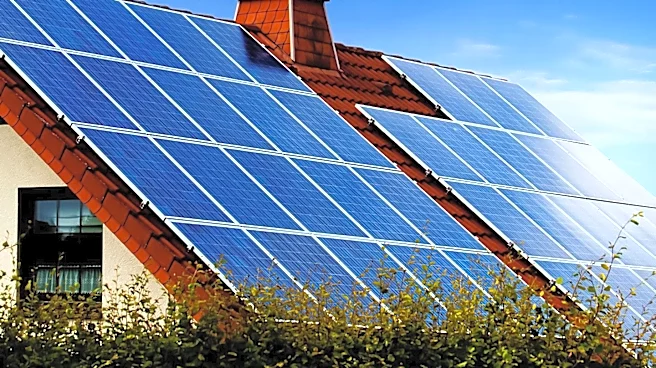
Arizona homeowners are increasingly finding that adding battery storage to their solar panel systems is essential for maximizing financial returns, especially given that most utility companies buy back excess solar power at a lower rate than the electricity
they sell. This dynamic means that storing daytime solar energy for evening use, when demand and electricity prices are typically higher, can significantly improve savings. The importance of batteries is particularly pronounced in Arizona, where high electricity use for air conditioning continues after sundown. Homeowners report that while solar panels provide substantial benefits, the 'math changes' with the inclusion of batteries, making solar more financially viable and enhancing grid independence. Comparison shopping for solar installations and battery systems is also highlighted as a critical step for homeowners to secure the best prices and incentives.
Why It's Important?
The growing reliance on solar batteries in Arizona reflects a broader trend in the U.S. where homeowners are seeking greater control over their energy consumption and costs. As utility buyback rates for excess solar generation become less favorable, the economic incentive to store and self-consume solar power increases. This shift impacts the solar industry by driving demand for integrated solar-plus-storage solutions, influencing product development and installation practices. For homeowners, batteries offer not only enhanced financial savings by reducing reliance on grid electricity during peak hours but also provide critical backup power during outages, improving energy resilience. This development underscores the evolving landscape of residential solar, moving beyond simple grid-tied systems to more sophisticated, self-sufficient energy solutions, which can also contribute to grid stability by reducing peak demand on utilities.
What's Next?
As the trend towards solar-plus-battery systems continues, homeowners can expect to see more competitive offerings and technological advancements in battery storage. The increasing adoption of batteries may also prompt utilities and regulators to re-evaluate existing net metering policies and explore new frameworks that better integrate distributed storage into the grid. Homeowners will need to carefully assess their energy consumption patterns, local utility rates, and available incentives to determine the optimal battery size and system configuration. The emphasis on comparison shopping will likely grow, with platforms like EnergySage playing a crucial role in connecting consumers with vetted providers and transparent quotes. Furthermore, the success of battery integration in states like Arizona could serve as a model for other regions facing similar challenges with utility buyback rates and peak demand management.
Beyond the Headlines
The integration of solar batteries into residential energy systems represents a significant step towards energy decentralization and consumer empowerment. By enabling homeowners to store and manage their own energy, batteries reduce dependence on centralized utility grids and foster a more resilient energy infrastructure. This shift has profound implications for the traditional utility business model, potentially leading to a redefinition of their role from sole energy providers to grid managers and service facilitators. Ethically, it raises questions about equitable access to these advanced energy solutions, as the upfront cost of batteries can still be a barrier for some households. Culturally, it signifies a growing desire for self-sufficiency and environmental consciousness among homeowners. The long-term impact could be a more robust, distributed, and sustainable energy ecosystem, but it will require careful policy design to ensure broad participation and avoid creating new energy divides.