



What's Happening?
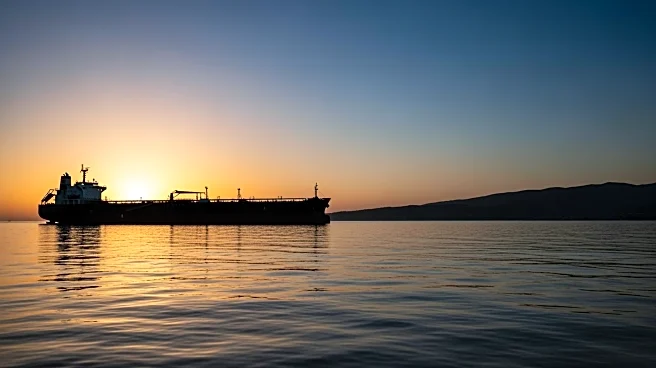
President Trump has ordered a complete blockade of all sanctioned oil tankers entering and leaving Venezuela. This decision is part of a broader strategy to exert pressure on the Venezuelan government, which Trump has labeled as a foreign terrorist organization.
The blockade is expected to affect approximately 0.4-0.5 million barrels of oil per day, potentially increasing oil prices by $1-2 per barrel. The move comes amid ongoing geopolitical tensions and concerns over global oil demand. While many vessels picking up oil in Venezuela are under sanctions, others transporting oil from Iran and Russia have not been sanctioned. Additionally, tankers chartered by Chevron are carrying Venezuelan crude to the U.S. under a previously granted authorization. China remains the largest buyer of Venezuelan crude, accounting for about 4% of its imports.
Why It's Important?
The blockade ordered by President Trump could have significant implications for global oil markets. By restricting Venezuelan oil exports, the U.S. aims to increase pressure on the Venezuelan government while potentially driving up global oil prices. This action could lead to increased costs for oil-importing countries and impact global supply chains. The decision also highlights the ongoing geopolitical tensions between the U.S. and Venezuela, as well as the broader implications for U.S. foreign policy in the region. The move may also affect U.S. relations with other countries involved in Venezuelan oil trade, such as China and Russia.
What's Next?
The blockade's long-term impact on oil prices will depend on its duration and any potential retaliatory actions by affected countries. If the embargo remains in place for an extended period, it could lead to further increases in crude prices, particularly for heavy crude grades. The U.S. may also face challenges in enforcing the blockade, as it is unclear how many tankers will be affected and how the U.S. will implement the blockade. The situation could escalate if other countries respond with countermeasures, potentially affecting the broader oil and gas systems in the Americas.