
What's Happening?
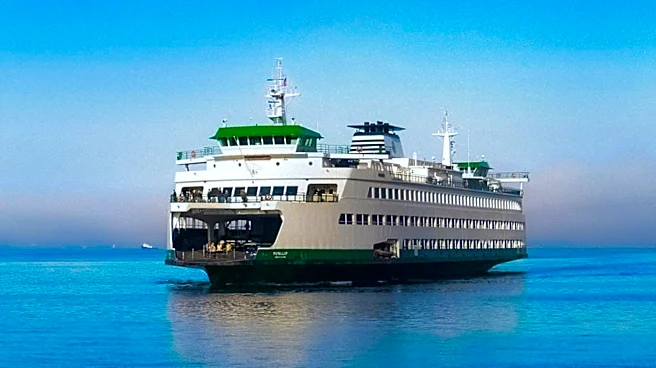
The Washington State Department of Transportation (WSDOT) is inviting the public to vote on interior design color schemes for its new hybrid-electric ferry fleet. Construction is currently underway on the first vessel, named Wishkah, which is anticipated
to begin service in 2030. This ferry is the first of three planned hybrid-electric vessels, part of a broader initiative to modernize and rebuild the nation's largest ferry fleet. The public can choose from three options: 'Earthy Calm,' featuring warm, natural tones; 'Traditional Marine,' with classic coastal blues; and 'Hybrid Bold,' which includes contemporary teal and burnt orange accents. The survey, consisting of five multiple-choice questions, is open until November 30 and aims to gather feedback to inform the final interior design recommendation for agency leadership.
Why It's Important?
This public engagement is significant as it allows Washington residents to directly influence the aesthetic and atmosphere of a key public transportation service they will utilize for decades. The transition to hybrid-electric ferries is a critical step in WSDOT's goal to electrify its entire fleet by 2040. This initiative is projected to significantly reduce greenhouse gas emissions, as the agency currently consumes approximately 19 million gallons of diesel fuel annually. Beyond environmental benefits, the electrification effort is expected to improve system resiliency and save millions in fuel costs, impacting taxpayers and the state's budget. The interior design, while seemingly minor, contributes to the overall passenger experience and comfort, reflecting the state's commitment to both sustainability and user-centric design.
What's Next?
Following the closure of the public survey on November 30, WSDOT will analyze the responses to develop a final interior design recommendation for its leadership. The first hybrid-electric ferry, Wishkah, is slated for service in 2030, with two more hybrid-electric ferries to follow. The agency plans to continue its fleet modernization efforts, aiming for a full transition to hybrid-electric power across its entire fleet by 2040. This long-term strategy will involve ongoing construction and integration of new vessels, progressively reducing the environmental footprint of Washington State Ferries and potentially influencing other state transportation agencies to adopt similar sustainable practices.
Beyond the Headlines
The public's involvement in selecting the interior design for the new ferries highlights a growing trend in public infrastructure projects: incorporating community preferences into design decisions. This approach can foster a sense of ownership and satisfaction among users, potentially increasing public support for large-scale government initiatives. Furthermore, the broader shift towards hybrid-electric technology in the ferry system underscores a significant move away from fossil fuels in public transport, setting a precedent for environmental responsibility. This could inspire other regions and industries to accelerate their own transitions to cleaner energy, contributing to national climate goals and promoting innovation in green technology. The choice of interior colors, while a small detail, symbolizes a forward-looking vision for public services that prioritizes both sustainability and user experience.