
What's Happening?
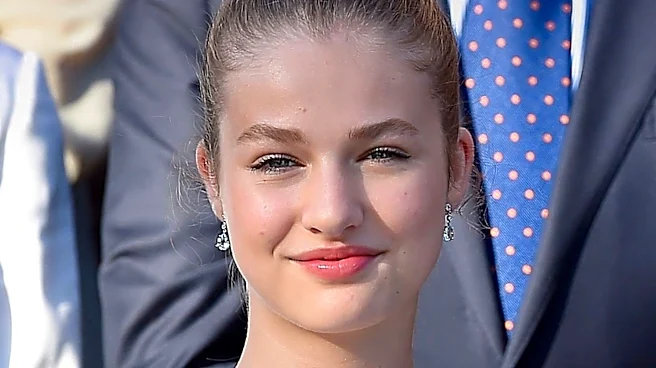
Princess Leonor of Spain is reportedly increasing her involvement in the daily work of her parents, King Felipe VI and Queen Letizia, at Zarzuela Palace. These discreet meetings and conversations are not
public events but are designed to familiarize her with the inner workings of the Spanish Crown. According to Monarquía Confidencial, citing sources close to the Palace, the heir is showing growing interest in King Felipe VI's daily work and the internal mechanisms of the monarchy. Her presence at Zarzuela allows her direct contact with the Monarch, enabling her to observe how audiences are prepared, national and international news is analyzed, and diplomatic matters are addressed. This increased engagement coincides with her return to Madrid, where she is balancing university studies with her responsibilities as Princess of Asturias. Her institutional prominence has also been growing, as evidenced by her more visible role in the recent Princess of Asturias Awards.
Why It's Important?
This development is significant for the future of the Spanish monarchy, as it marks a crucial phase in Princess Leonor's preparation for her eventual role as Head of State. By gaining practical experience alongside her father, she is learning the institutional and diplomatic dimensions of the Crown. Queen Letizia also plays a key role, focusing on communication, meticulous preparation, and the public presentation of official engagements. This comprehensive training ensures that Leonor understands not only the content of her interventions but also the context, audience, and institutional significance of her words. This gradual integration into royal responsibilities is vital for a smooth transition of power and for maintaining the stability and public perception of the monarchy in Spain. The process aims to equip her with the necessary skills and understanding to represent Spain effectively both domestically and internationally.
What's Next?
The Palace intends for Princess Leonor's integration into the responsibilities of the Crown to be gradual, avoiding any acceleration of timelines or displacement of the King. The focus remains on preparing the heir to thoroughly understand the role she will eventually assume. This suggests a continued period of mentorship and observation, where she will likely participate in more behind-the-scenes activities and potentially take on more visible, albeit still carefully managed, public engagements as her university studies progress. The ongoing preparation will likely involve further exposure to national and international affairs, diplomatic protocols, and the various facets of representing the Spanish state. The aim is to ensure she is fully equipped for her future duties without rushing her development.
Beyond the Headlines
The discreet nature of Princess Leonor's increased involvement highlights a strategic approach to royal succession, emphasizing practical learning over immediate public display. This method allows for a deeper understanding of the complexities of the monarchy, including its ethical and legal dimensions, away from intense public scrutiny. It also reflects a modern approach to preparing a future monarch, combining traditional military training and academic studies with hands-on experience in statecraft and public relations. The dual influence of King Felipe VI, focusing on institutional and diplomatic aspects, and Queen Letizia, emphasizing communication and public image, suggests a well-rounded preparation designed to navigate the challenges of a contemporary monarchy. This careful cultivation of the heir aims to ensure the long-term relevance and stability of the Spanish Crown in a changing world.