



What's Happening?
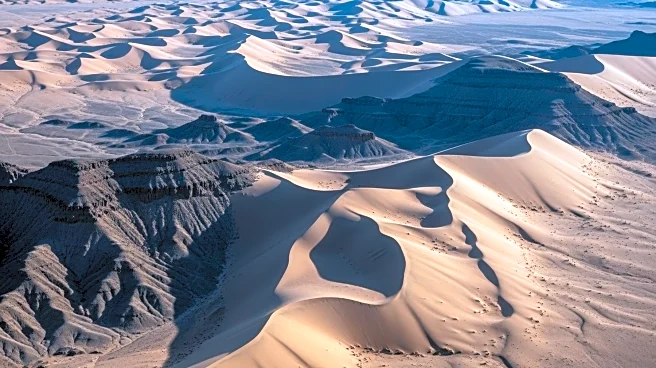
NASA's satellite imagery has revealed intriguing geological formations in the Sahara Desert, specifically in central Mauritania. These formations, known as black mesas, are ancient sandstone remnants that have developed a unique rock varnish over millions
of years. The mesas influence local wind patterns, causing sand dunes to form on one side while the other remains barren. This phenomenon is due to the mesas altering airflow, slowing winds on one side and creating vortex winds on the other, which prevent dune formation. The consistent dune patterns observed over a decade suggest a stable interaction between the terrain and wind.
Why It's Important?
The study of these mesas provides valuable insights into geological processes and wind dynamics in arid environments. Understanding how these formations influence sediment deposition can inform broader research on desertification and climate change. Additionally, the mesas serve as terrestrial analogs for similar features on Mars, aiding in the interpretation of Martian geology. This research highlights the importance of remote sensing in monitoring environmental changes and contributes to our understanding of Earth's and other planets' geological history.