

What's Happening?
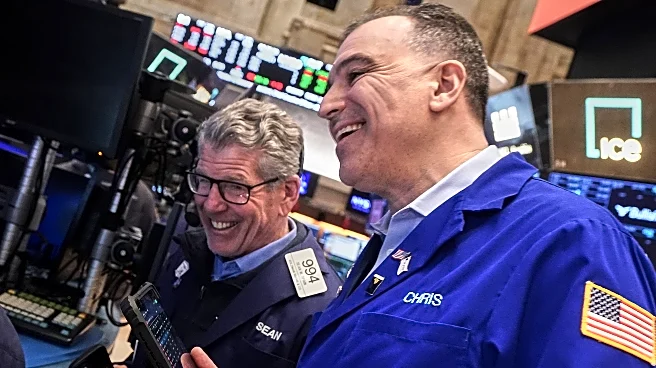
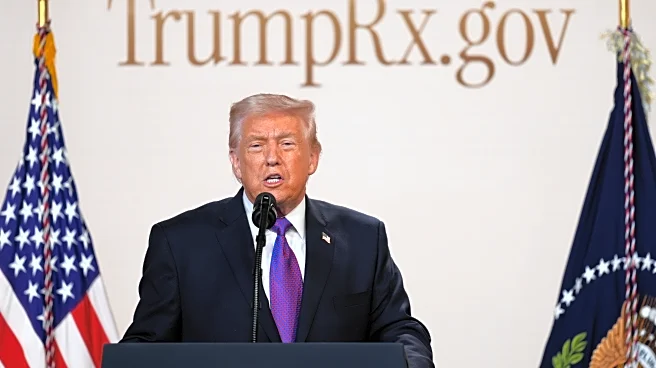
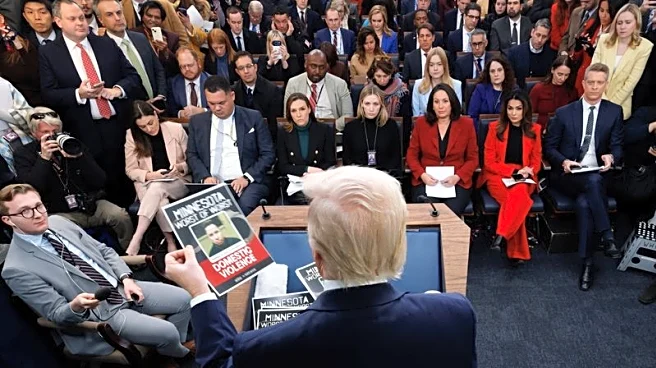
President Trump has proposed a one-year cap on credit card interest rates at 10%, aiming to address affordability issues for American consumers. This proposal has sparked significant debate, particularly among Wall Street executives who argue that such
a cap could restrict credit availability and negatively impact the economy. The current average credit card interest rate stands at 19.64%, and the proposed cap is seen as a drastic reduction. While some advocates believe the cap could save Americans billions annually, critics, including major bank executives, warn of unintended consequences such as reduced credit access and diminished consumer rewards. The proposal comes as the U.S. midterm elections approach, with Trump positioning it as a response to affordability concerns.
Why It's Important?
The proposed interest rate cap is significant as it directly challenges the profit models of major banks and credit card companies, which rely heavily on interest rates as a revenue source. If implemented, the cap could lead to a reduction in credit availability, affecting consumers who rely on credit cards for financial flexibility. Additionally, the proposal highlights ongoing debates about consumer protection and financial regulation, with potential implications for the broader economy. While some see the cap as a necessary reform to curb excessive interest rates, others fear it could lead to reduced consumer spending and economic growth. The proposal also underscores the political dynamics at play, as Trump seeks to address voter concerns ahead of the elections.
What's Next?
The implementation of the proposed cap remains uncertain, as it would require legislative action or voluntary compliance from credit card issuers. The proposal is likely to face resistance from financial institutions and could become a contentious issue in Congress. If pursued, the cap could lead to negotiations between the administration and banks to find a middle ground. Additionally, the proposal may prompt further discussions on financial regulation and consumer protection, potentially influencing future policy decisions. Stakeholders, including consumer advocacy groups and financial industry representatives, are expected to weigh in on the proposal's feasibility and impact.
Beyond the Headlines
Beyond the immediate financial implications, the proposal raises questions about the balance between consumer protection and market freedom. It also highlights the tension between regulatory intervention and free-market principles, a recurring theme in U.S. economic policy. The proposal could set a precedent for future regulatory actions in the financial sector, influencing how interest rates and consumer credit are managed. Moreover, the political motivations behind the proposal, given its timing before the midterm elections, suggest a strategic move to appeal to voters concerned about economic inequality and financial burdens.