


What's Happening?
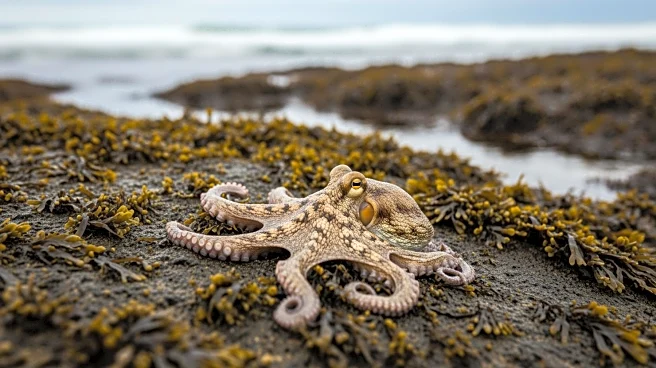
Marine biologists have discovered the remains of a rare seven-armed octopus, known as a 'septopus', on a beach in Collieston, Scotland. This species, also referred to as the blob octopus, is one of the largest octopuses, capable of reaching lengths of up
to 11 feet. The discovery was made by a beachcomber who found the tentacles on Aberdeenshire beach and alerted the staff at Forvie National Nature Reserve. The septopus is typically found in deep waters below 1,640 feet and is so rare that only four have been observed alive in the past 40 years. The most recent sighting was captured by a remotely-piloted vehicle in Monterey Bay, California. Despite its name, the septopus actually has eight limbs, with the males hiding their eighth limb, a reproductive organ, in a sac behind their right eye. The remains have been preserved for further study, with some potentially being displayed in museums.
Why It's Important?
The discovery of the septopus is significant for marine biology as it provides an opportunity to study a rare and elusive species. Understanding the biology and behavior of such deep-sea creatures can offer insights into marine ecosystems and biodiversity. This find also highlights the importance of preserving marine habitats and the potential impacts of human activities, such as trawling, on deep-sea life. The preservation of the remains for further study could lead to new scientific knowledge and contribute to conservation efforts. Additionally, the discovery may attract interest from the scientific community and the public, raising awareness about marine life and the need for its protection.
What's Next?
The remains of the septopus have been frozen for further scientific analysis. Researchers will likely conduct studies to understand more about its anatomy, behavior, and ecological role. The findings could be shared with the broader scientific community, potentially leading to collaborative research efforts. Museums may also display the preserved specimens to educate the public about this rare species and the importance of marine conservation. Ongoing monitoring of deep-sea environments may be necessary to protect such rare species from threats posed by human activities.