






What's Happening?
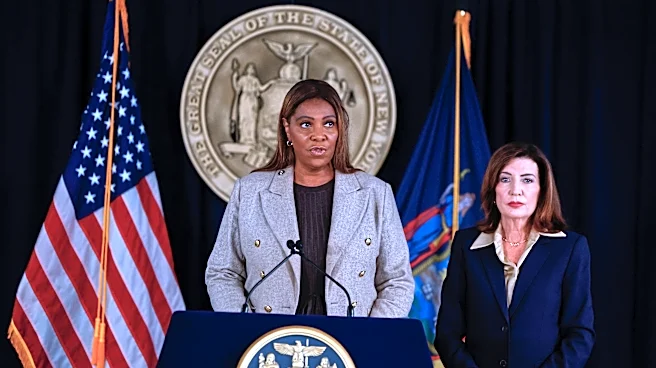
Governor Kathy Hochul has announced the allocation of $32.5 million in annual competitive grants under the Increasing Training Capacity in Statewide Health Care Facilities program. This funding will be distributed among 34 not-for-profit healthcare facilities
across all ten regions of New York State. The grants are designed to expand and enhance workforce training programs, with each facility tailoring its approach to address the specific healthcare workforce needs of its community. The Chautauqua Center and UPMC Chautauqua are among the recipients. State Health Commissioner Dr. James McDonald emphasized the urgent need to address New York State's healthcare workforce shortage. These five-year awards, effective from October 1, 2026, through September 30, 2031, aim to build a robust healthcare workforce pipeline, targeting shortages in nursing, allied health, behavioral health, primary care, oral health, and other critical disciplines through 2036. The awards, ranging from $500,000 to $1,000,000 annually, will support facility-based training programs for current and future employees pursuing recognized licenses and certifications, covering expenses such as tuition, instructor salaries, simulation lab equipment, wage subsidies, and recruitment costs. All awards are contingent upon review and approval by the Office of the State Comptroller.
Why It's Important?
This significant investment by New York State underscores a critical effort to combat the pervasive healthcare workforce shortages impacting communities across the state. By empowering local healthcare facilities to design and implement tailored training programs, the initiative aims to create a more resilient and responsive healthcare system. The funding will directly benefit aspiring healthcare professionals by reducing financial barriers to education and training, thereby increasing the pool of qualified workers. For existing healthcare employees, these grants offer opportunities for professional development and career advancement, potentially improving retention rates within the sector. The focus on diverse healthcare disciplines, including nursing, allied health, and behavioral health, acknowledges the multifaceted nature of the shortage and seeks to strengthen various essential services. Ultimately, this program is vital for ensuring that New York residents have access to high-quality healthcare services, particularly in underserved areas, and for stabilizing the state's healthcare infrastructure against future challenges.
What's Next?
The awarded healthcare facilities will now proceed with implementing their tailored training programs, with the funding becoming effective on October 1, 2026. Over the next five years, these programs are expected to significantly increase the number of trained healthcare professionals in New York State. The Health Resources and Services Administration projects that healthcare workforce shortages will persist through 2036, indicating a sustained need for such initiatives. The Office of the State Comptroller will conduct reviews and approvals for all awards, ensuring proper oversight and accountability. Future evaluations will likely assess the effectiveness of these programs in meeting their objectives, including the number of individuals trained, their successful placement in healthcare roles, and the overall impact on reducing workforce shortages. Continued collaboration between state agencies, healthcare facilities, and educational institutions will be crucial to adapt and refine these strategies as healthcare needs evolve.
Beyond the Headlines
The initiative highlights a broader national challenge of healthcare workforce shortages, which has been exacerbated by factors such as an aging population, increased demand for services, and the impact of recent public health crises. New York's approach of decentralizing the training program design, allowing individual facilities to assess and address their unique local needs, represents a strategic shift from a 'one-size-fits-all' model. This localized strategy could serve as a blueprint for other states grappling with similar issues, fostering more effective and community-responsive solutions. Furthermore, by investing in training infrastructure and supporting diverse healthcare professions, the state is not only addressing immediate staffing gaps but also building a more sustainable and adaptable healthcare ecosystem for the long term. The program also implicitly acknowledges the economic benefits of a robust healthcare sector, including job creation and local economic stability, particularly in regions where healthcare facilities are major employers.