



What's Happening?
Abdallah Aljazzar, a Palestinian from Gaza, recounts his journey from Rafah to Ireland, where he sought asylum and is now pursuing a master's degree. He describes the severe conditions in Gaza, including a period of famine during which he lost significant
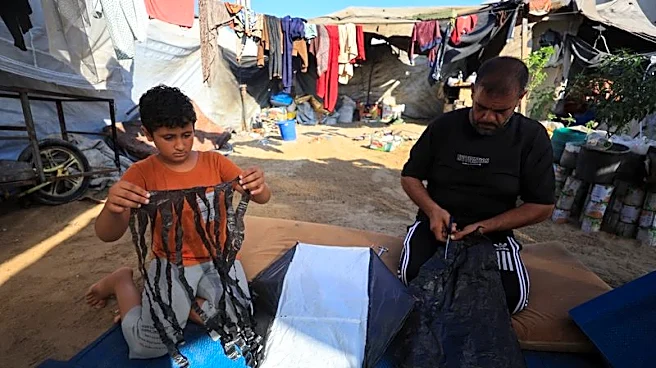
weight, only to gain 22kg in Ireland as his body recovered. Aljazzar's family remains in Gaza, living in a tent, and his brother Nour is still missing. He highlights the ongoing trauma and grief experienced by Gazans, noting that many, including himself, use smoking as a coping mechanism. His narrative underscores the stark contrast between his new life in Ireland and the continued suffering of his family in Gaza, who face constant threats from airstrikes and a lack of basic necessities like medicine and education. He recently made the decision to seek asylum in Ireland due to the inability to return home and the ongoing crisis in Gaza.
Why It's Important?
Aljazzar's personal account provides a poignant and humanizing perspective on the profound impact of the Gaza conflict on individuals and families. His experience of famine and subsequent physical recovery in Ireland illustrates the severe humanitarian crisis within Gaza, where basic survival needs are unmet. The ongoing displacement of his family and the uncertainty surrounding his missing brother highlight the long-term psychological and social consequences of conflict, including grief, trauma, and the disruption of family units. His decision to seek asylum reflects the desperation faced by many Gazans who see no viable future in their homeland, emphasizing the need for international protection and sustainable solutions for those affected by prolonged conflict. The narrative also subtly touches upon the challenges of cultural assimilation and the persistent longing for home, even in safer environments.
What's Next?
Aljazzar is currently awaiting the results of his asylum interview in Ireland, which will determine his legal status and future in the country. His family in Gaza continues to live in a tent, facing ongoing hostilities and a lack of essential services, suggesting a continued need for humanitarian aid and international intervention in the region. The broader situation in Gaza indicates that many others may also seek refuge elsewhere, leading to potential increases in asylum applications in various countries. The narrative implies that the psychological and emotional recovery for individuals like Aljazzar will be a long-term process, even if their physical safety is secured. The ongoing conflict and its aftermath will likely continue to drive displacement and humanitarian crises, necessitating sustained global attention.
Beyond the Headlines
Aljazzar's story delves into the less visible, yet equally devastating, aspects of conflict: the psychological toll, the struggle for identity in exile, and the profound sense of loss that extends beyond physical harm. His use of smoking as a coping mechanism and his observation of a 'fraternity of smokers' among exiles reveal the shared trauma and the search for solace in difficult circumstances. The narrative also touches upon the complex relationship between personal and collective grief, where individuals are weighed down by their own losses while also bearing witness to the suffering of their entire community. This personal account highlights the ethical responsibility of the international community to address not only the immediate humanitarian needs but also the long-term mental health and social integration challenges faced by those displaced by conflict.