

What's Happening?
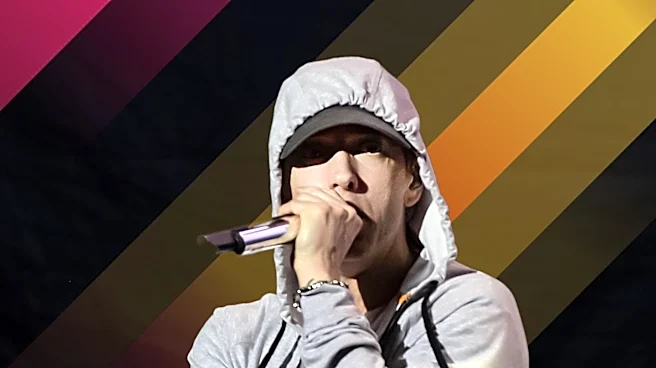
The term 'stan,' widely used to describe an overzealous or obsessive fan, originated from Eminem's 2000 song 'Stan,' which depicted a fan whose obsession turned deadly. Initially defined by Urban Dictionary as a combination of 'stalker' and 'fan,' the
word was officially added to the Oxford English Dictionary in 2017. This cultural phenomenon, characterized by intense loyalty and sometimes toxic behavior, has evolved significantly with the rise of social media platforms like Twitter, TikTok, and Instagram. These platforms provide fans with constant access to their idols, fostering what some refer to as 'Celebrity Worship Syndrome.' Stan culture has developed its own distinct language and tribal identity, particularly on 'Stan Twitter,' which is a sprawling community of fan accounts. While it promotes community building, it also has a dark side, leading to instances of harassment, 'cancellations,' and intense internal competition among fans. This dynamic has recently extended into the U.S. political landscape, with fan-like behaviors now observed in support of political figures.
Why It's Important?
The evolution of 'stan culture' from music fandoms into the U.S. political sphere signifies a notable shift in how political discourse and engagement are shaped online. The intense, often uncritical loyalty associated with stanning, previously directed at celebrities, is now being applied to political figures. This can lead to a highly polarized environment where criticism of a favored candidate is met with aggressive pushback, mirroring the 'toxic fandom' seen in entertainment. The use of fan-generated content, such as 'fan edits' and memes, to promote political candidates, as seen with Vice President Kamala Harris, demonstrates a new form of digital campaigning that can influence public perception and engagement, particularly among younger demographics. This trend blurs the lines between entertainment and civic participation, potentially impacting the depth and quality of political debate. While it can mobilize supporters, it also carries the risk of fostering blind devotion rather than informed civic engagement, which could have long-term implications for democratic processes.
What's Next?
The integration of 'stan culture' into U.S. politics is expected to continue, especially as younger communications staff on political campaigns intuitively understand and leverage these dynamics. The 2024 election cycle has already demonstrated the power of well-timed memes and fan edits to influence news cycles and shape narratives around candidates. We can anticipate more political campaigns adopting strategies that mimic celebrity fandoms, utilizing social media to cultivate strong, loyal bases of support. This could lead to an increased focus on personality-driven politics and a further blurring of the lines between political figures and entertainment icons. However, observers caution that this merger carries risks, including the potential for increased online harassment, doxing, and a refusal to tolerate criticism, which could further warp political discourse. The long-term question remains whether this energy translates into meaningful civic engagement or simply contributes to more online noise, impacting the substance of political debate and the health of democratic processes.
Beyond the Headlines
The deeper implications of 'stan culture' permeating U.S. politics extend to the ethical and cultural dimensions of public discourse. The phenomenon highlights a growing trend of 'parasocial relationships' where individuals feel a perceived friendship with public figures based on online interactions, which can be exploited for political gain. This raises questions about the authenticity of political support and the potential for manipulation when emotional attachment supersedes critical evaluation. The adoption of slang and meme culture, often originating from African-American Vernacular English and LGBTQ+ communities, by political campaigns also points to a broader cultural appropriation and commercialization of subcultures. Furthermore, the 'toxic side' of stan culture, characterized by harassment and the suppression of dissenting opinions, poses a significant threat to open and respectful political dialogue. This shift could lead to a political landscape where loyalty is prioritized over policy, and where the ability to generate viral content becomes as crucial as substantive political platforms, potentially undermining the foundations of informed democratic participation.