










What's Happening?
Mexico has initiated legal action by filing criminal complaints with state prosecutors in the United States concerning the deaths of its citizens in U.S. immigration custody and during enforcement operations. This move, announced by Mexico's foreign ministry,
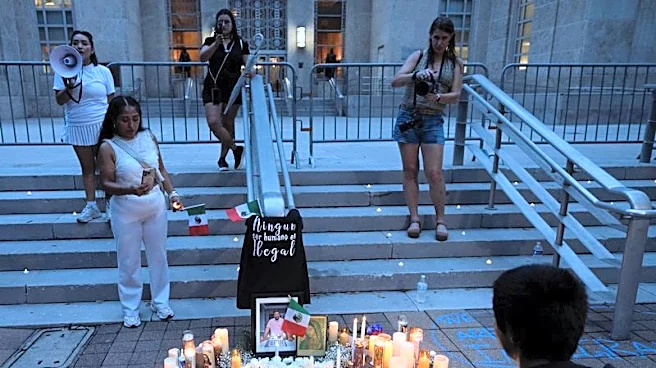
follows the deaths of at least 14 Mexican nationals in ICE custody and several others during arrest operations, including a recent fatal shooting by an ICE agent in Houston. In addition to these complaints, Mexico has sent cease-and-desist letters to U.S. detention centers where these deaths occurred. President Claudia Sheinbaum emphasized the importance of addressing these incidents, stating that the government cannot ignore the deaths of Mexican citizens. Furthermore, Mexico's foreign minister has reached out to the United Nations High Commissioner for Human Rights to investigate these incidents and potentially involve the Human Rights Council.
Why It's Important?
This development highlights the ongoing tensions between Mexico and the United States regarding immigration enforcement and the treatment of migrants. The legal actions taken by Mexico could lead to increased scrutiny of U.S. immigration practices and potentially impact diplomatic relations between the two countries. The involvement of the United Nations could further internationalize the issue, bringing global attention to the treatment of migrants in U.S. custody. This situation underscores the broader challenges faced by migrants and the need for comprehensive immigration reform to address systemic issues within U.S. immigration enforcement agencies.
What's Next?
The filing of criminal complaints and the involvement of the United Nations suggest that there may be further investigations into the deaths of Mexican nationals in U.S. custody. These actions could lead to legal proceedings against individuals or agencies found responsible for these deaths. Additionally, the U.S. government may face pressure to review and potentially reform its immigration enforcement policies and practices. The response from U.S. authorities and any subsequent legal or policy changes will be closely watched by both domestic and international stakeholders.