




What's Happening?
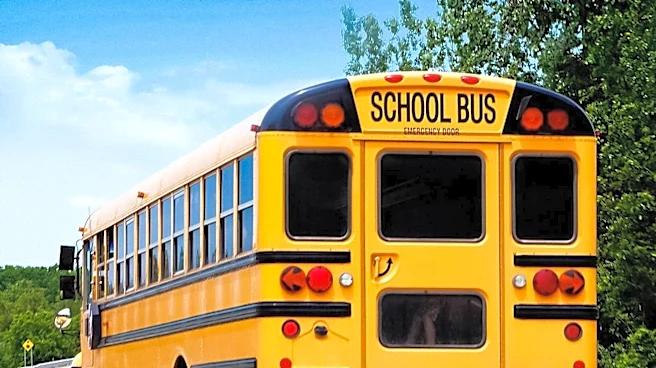
More than 300 public school students in Lakewood, New Jersey, are set to lose their free busing services for the upcoming academic year. Concurrently, thousands of private school students in the township will experience increased fees for their bus transportation.
This decision by township officials stems from their declaration that they can no longer subsidize these transportation costs. The change will directly impact families, forcing them to find alternative transportation arrangements or bear additional financial burdens. The sudden withdrawal of free busing for public school students and the fee hikes for private school students reflect a significant shift in local policy regarding educational transportation, affecting a large segment of the student population in Lakewood.
Why It's Important?
This development in Lakewood, New Jersey, is significant due to its direct impact on hundreds of families and the broader educational landscape of the township. The loss of free busing for public school students can create substantial logistical and financial challenges for parents, potentially affecting school attendance, parental employment, and household budgets. For private school students, increased busing fees add to the already existing costs of private education, which could make it less accessible for some families. This situation highlights the critical role of transportation in ensuring equitable access to education and the financial pressures faced by local governments in funding essential services. It also underscores the potential for policy changes to disproportionately affect different segments of the community, prompting concerns about educational equity and financial strain on families.
What's Next?
Families affected by the loss of free busing and increased fees in Lakewood, New Jersey, will need to make alternative transportation arrangements for their children. This could involve carpooling, public transportation, or private arrangements, all of which may incur additional costs or logistical complexities. The decision by township officials may lead to public outcry and calls for reconsideration or alternative solutions. Parents, community groups, and school advocates might organize to lobby local authorities for a reversal of the decision or the implementation of new subsidy programs. The situation could also prompt discussions about the long-term sustainability of educational funding and transportation services in Lakewood, potentially leading to broader policy debates and community engagement efforts to address these challenges.
Beyond the Headlines
The changes in student busing in Lakewood, New Jersey, reveal deeper issues concerning the allocation of public resources, the balance between public and private education support, and the socio-economic impact of local government decisions. This situation could exacerbate existing inequalities, as families with fewer financial resources may struggle more to adapt to the new transportation costs. It also raises questions about the responsibilities of local government in providing essential services like school transportation and the criteria used to determine which services are subsidized. The long-term implications could include shifts in school enrollment patterns, increased traffic congestion around schools, and a greater demand for community-based transportation solutions. This event serves as a case study in how local policy changes can have far-reaching consequences on daily life and educational access within a community.